Showing posts with label Vietnam. Show all posts

Wednesday, 9 October 2019

WCQ Preview: Regional derbies headline the week


Round 2 of World Cup Qualification is never a stage that the Asian elite are particularly fond of; either made to play out comfortable victories or suffer from an outsider out to break a record (or over-enthusiastically and inadvertently a star player’s leg). Fans of those sides would have been mildly enthused however with challenging if in the bulk of cases comfortable opening day fixtures, yet October brings around a stark reminder of the sheer breath of Asian football

Matchday 3 four years ago bore witness to 12 home victories from 15 matches played, one mere “upset”, and a combined total of 73 goals scored against 3 conceded. A one sided avalanche of goals and subsequent questions of whether Asia was sailing in the right direction. Unfortunately, the AFC have failed to address the schedule and plumped for another full accumulator friendly set of fixtures that looks to be heading only one way.

While Thursday in the main looks to be a matchday to watch from behind the sofa, there are molecules of interest in the form of some mammoth regional derbies and the plight of some struggling fallen giants to savour, the two calling cards of this early qualification cycle so far. There remains much to see in International Week, you just might have to scratch the surface to find it.

Suzuki Cup final rematch for two of Southeast Asia’s best

It was a concern of many that Group G was never going to live up to the hefty billing it received upon the WCQ draw at AFC House in July, yet the magic fingers of Tim Cahill have sprinkled their magic in Southeast Asia, as this regional super group starts to meander a complex but entertaining path.

So much so, Indonesia, the notable weakest side in the ladder have seen pressure already flung upon their coach Simon McMenemy after their opening day defeat, such is the expectation and regional pride that is at stake. While UAE, the only team from outside the region within the group, under the calculated Bert van Marwijk look to be avoiding such drama, the melee below offers plenty to the neutral.

Thursday’s monumental clash between Vietnam and Malaysia arguably trumps any other match that day, given the pedigree - a rematch of December's Suzuki Cup final, the significance - defeat would shunt either side way behind the progression spots, and the contrast in styles - a clash of two single minded managers.

As was on display 10 months ago, a positive, attack focussed Malaysia under Tan Cheng Hoe, sought the advantage only to be hit by a clever, well organised but reactive Vietnam counter play, a style embedded by their Korean coach Park Hang-seo.

Vietnam have rode a positive year; their second ever regional crown, followed by an impressive Asian Cup campaign with players making some upward switches abroad. Malaysia on the other hand have had to negotiate preliminary WCQs and have already tasted a home defeat at the hands of UAE.

This match has all the hallmarks of a passing of the baton however, from Vietnam to Malaysia as SEA’s primary focus on the continental stage. It should be considered though, as Malaysia have shown so far, while they offer some of the most exciting and brave football on offer anywhere in Asia, their discipline and focus remains off in key moments.

If Park Hang-seo had to handpick a clash of styles, this would be his ideal situation. With Malaysia in the driving seat to take the initiative, Vietnam set as the pouncing cat ready to turn the tables is a fascinating thought. Yet on the flip side; the attacking duo of Syafiq Ahmed & Safawi Rasid flanked by an improving Mohamadou Sumareh could have you out of sight by half time. This game promises to have it all.

Another new dawn for Uzbekistan?

The eternal bridesmaid story of the Uzbekistan national team is one regularly revisited, however another tale of misery and managerial change pits the team in an all too familiar state of uncertainty heading into this week’s World Cup qualification schedule. As soon as one new era under renowned coach Hector Cuper started, it was over, quickly extinguished upon opening day defeat to Palestine last month. After a moderately successful Asian Cup campaign which promised much going forward, the long wait to see the Uzbek national team appear at a World Cup, continues to look like a long distant dream.

For many it was a case of “I told you so.” Cuper’s appointment had a lot to do with his previous role as Egyptian national team coach; having achieved the ultimate goal of the UFA, of qualifying a team for the World Cup. His tactical acumen has regularly come under scrutiny however; for being systematic and cautious, rather than embracing attacking talent. Uzbekistan clearly don’t have a Mohamed Salah in their midst to inspire a chance out of nothing.

That being said the Asian Cup, in brief moments suggested that Cuper may be able to integrate a young cohort of players that have been impressive of late, with those last few exiting members of the previous golden generation. The likes of Eldor Shomurodov were starting to illustrate their true ability on the continental stage, so a seamless transition into early World Cup qualification was treated as an expectation rather than a wish. Uzbekistan’s opening day defeat in Al-Ram inevitably forced his employers hand, and Cuper was swiftly sacked at the first opportunity, leaving the White Wolves playing catch up from bottom spot.

Whether designed or not, Cuper’s successor Vadim Abramov, into his second stint as Uzbekistan boss, is a hopeful one in terms of his ideals. His mantra for attacking play has been applauded, most recently with a young, exciting Bunyodkor team. Defensively he has always been questioned, most prominently in their 6-0 semi final humiliation to Australia in his last match in charge of the national team at the 2011 Asian Cup, one area that’ll not calm national team observers who have witnessed some ropey to say the least defending over the last few months.

Abramov is flanked by legendary Uzbek international Timur Kapadze, who had temporarily taken the reins of the national team ahead of Cuper’s appointment last year. His impact in those brief months suggested he had the ability to deliver the very best out of the young crop of players coming through, and having such a respected head in the dressing room going forward, should allow for an inspirational edge which they’ve been sorely lacking.

While they start from a low point, Group D remains wide open after similar upsets for Saudi Arabia and Palestine leave the ladder in a particularly tentative state. The question of what will change is also up in the air, as Abramov selected a similar looking squad to that of the Cuper regime. Much of the change will only come on the pitch in their intention, and most probably the positioning of Odil Akhmedov, who continues to play an integral role in how play is dictated going forward.

Pyongyang hosts the Korean derby

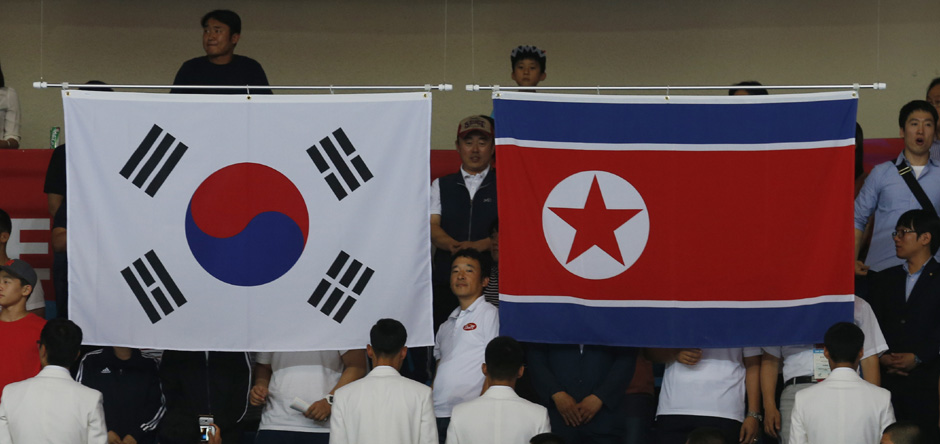
The common thread flowing through these early matchdays of this qualification cycle has been of regional rivalries, much larger than those outside have appreciated; Indonesia v Malaysia for example was barely whispered about. The upcoming Korean derby breaks through that worldwide consciousness, however with relations drawing closer to resolution over the last year, Tuesday’s derby has much more scrutiny put on it than normal.

This will be only the second time ever that South Korea have played in the North Korean capital of Pyongyang, their first competitive outing, having faced their neighbours on neutral territory the last time their paths crossed in qualification. Both teams head into the match in good form on the pitch, boasting 100% records, and having not conceded a goal between them, but outside that the state of play (like much to do with North Korea) is a mystery..

While South Korea’s preparations have been typically public, with coach Paulo Bento speaking quite openly about their priorities heading into this mammoth matchup, the North have remained unsurprisingly quiet, with even the venue kept under wraps until the AFC confirmed the arrangements a few weeks back. They were a shadow of their former selves in the UAE at the turn of the year, falling to three heavy defeats from three at the Asian Cup, but have hit their stride since then, winning the Intercontinental Cup in India over the summer, before picking up solid if only sparingly spectacular wins against Lebanon and Sri Lanka.

Home comforts continue to play a big part in their recent successes in qualification, a matter that they would undoubtedly have been keen on utilising in this upcoming match. What kind of atmosphere will greet the South Koreans is another unknown, but a sellout crowd is highly expected. For many outside observers the pressing issue will be how to view the match; North Korea have regularly shielded coverage of matches, even limiting real time commentary of even FIFA regulated competitive games, it would be in the AFC’s best interests to ensure this one runs transparently.

It comes as North Korean football returns to the forefront of the Asian footballing mind, with domestic champions April 25 making it to the AFC Cup final for the first time in their history. With clamour for coverage expected come the final at the King Il-sung Stadium in early November, the world will be eager to know how far North Korean football has progressed and whether the indications that they were about to integrate into wider society was a sign of what the future may bring or a fleeting statement to appease their political adversaries.

Tuesday, 22 January 2019

Asian Cup Matchday Review (Round of 16)


Just over a week until the grand finale, we’re starting to see the weak from the chaff emerge from what has been a tight and competitively contested Round of 16. The typical big four are through, despite several scares and while you could plump for an outsider to buck the trend, a familiar final four looks the likely outcome, question marks withstanding. There was finally a big name elimination however, as Saudi Arabia, qualifiers for last summer’s World Cup were dumped out by Japan, leaving head coach Juan Antonio Pizzi on tenuous ground. In that regard, here’s my look back on the round’s key talking points.

The Player

This was a round for goalkeeping heroics, after Dang Van Lam’s shootout performance saw Vietnam progress to the quarters (more on that later) and Alireza Beiranvand reaffirmed his penalty saving specialist tag by denying Oman’s Ahmed Kano from the spot for Iran. At that juncture, a rumbling debate started to emerge, of who in fact is the best keeper in Asia at the moment? The elephant in the room, one Mat Ryan had been criticised recently for his showings for the Socceroos; despite consistent performances domestically with Brighton, his form so far at the Asian Cup did little to turn around his doubters. His performance against Uzbekistan on Monday however, went someway to silence them.

His triumphant double stop in their penalty shootout victory, spared Australian blushes, after an erratic but ultimately blunt effort against a stubborn in transition Uzbek team. Ryan, when called upon was a colossus in the match, sometimes considered too rash in his early career, his movement and decision making have clearly come on, highlighted perfectly by his early stop to deny the man of the moment Eldor Shomurodov his 5th of the tournament. Ryan’s one handed save to his right to deny Marat Bikmaev in the poignant penalty saved his teammates bacon, who can still savour hope of back-to-back continental titles despite rarely getting going so far.

With regards to the debate over the best keeper in Asia right now, Ryan can easily point to domestic success as his mantle for high achievement. While Beiranvand experienced a whirlwind 2018, where he should’ve really been crowned AFC Player of the Year, he won’t be truly recognised as the continental best until he moves to Europe. Bringing it back to current matters, Ryan’s performance keeps him well within a shout of the Golden Glove reckoning, as Australia build albeit slowly to another lengthy finals appearance.

The Team

Coming up against the surprise package of the tournament thus far in Jordan, Vietnam were considered outsiders for progression, but slowly this side has developed from merely a hipster’s choice of young talented players to a real threat, setting up an almighty clash with Japan in the final eight. For Park Hang-seo, the risk of making a couple of significant starting changes from the side that brought regional success only a month ago, has brought its own reward of a quarter-final appearance, but is this the limit of their adventure in the Emirates?

Deploying their now synonymous, 343-cum-523 counter attacking setup, it hasn’t been the easiest of rides early on for Vietnam; out witted by Iraq on the opening day, in arguably the most attack filled match we’ve seen so far, followed by a humbling defeat to Iran. In the end they scraped through as a lucky loser, overcoming Yemen with little conviction, their days felt numbered. But a renewed sense of purpose occurred against Jordan, where the Vietnam of 2018 vintage, that thrived off these one-off tournament match ups (see Under 23s, Asian Games & Suzuki Cup campaigns) came roaring back from the fire.

The aforementioned Dang Lang Vam has been integral to this; commanding and brave, reaffirming a defence marshalled by Que Ngọc Hai, who has been magnificent over the last few weeks. Further forward and the flexibility and guile of the irrepressible Nguyen Quang Hai and Phan Van Duc behind the lively and ever growing in consistency Nguyen Cong Phuong, Vietnam are starting to look a devastating package in the final third. Up against the Samurai Blue next, the clash of two similar counter attacking displays looks set to be a tense, tactical battle of wits, but one Vietnam will come into in a world of confidence.

The Talking Point

Nearly seven months on from their rude awakening in Moscow, Saudi Arabia hit another low in their recent footballing history, falling in the Round of 16 of the Asian Cup, in what was meant to be a dominant tournament for the Green Falcons. While losing to Japan, on paper is no embarrassment, to exit their time in the Emirates, losing half of their allotted games, only managing to score and secure victory against moderate opposition (Lebanon and North Korea), the campaign as a whole and Juan Antonio Pizzi’s tenure in charge must be considered a failure.

Having bossed over 70% of possession, but succumbing to a 1-0 reversal against Japan, makes for familiar reading for any recent follower of Saudi football. Pizzi’s revolution that started just over a year ago, has been stark, admirable but ultimately unsuited for this group of players. The same issues that were on display at the World Cup, persisted into the Asian Cup; a clumsy looking defence and a regularly blunt attack. The midfield, despite missing the integral Salman Al-Faraj looked as competent as ever (as the possession stats illustrate), the problem as always, was in breaking the lines through to the attacking third.

It’s likely to be a matter of days before Pizzi’s time is cut short, especially after his damning criticism of the league’s standard in the aftermath of the match. For a spell that promised so much, aesthetic gain over gelling tactics with the resource available clearly doesn’t function on the international stage where you’re tasked to get the best out of the players you’ve got to hand. Following on from one of the most successful Saudi Arabian sides of modern times, under Bert van Marwijk, Pizzi failed to take on the feeling harnessed in qualification into two considerable competitions. He was offered more than any others have been previously, in being able to coach at two significant tournaments in succession, something the SFF will likely live to regret.

Friday, 21 December 2018

Asian Cup 2019: Vietnam (Preview)


Vietnam’s monumental leap into the higher reaches of Asian football, has been one of the standout stories of the last twelve months. From a promising contingent of youth players to regional champions, their return to the Asian Cup for the first time on foreign soil since 1960 marks the cherry on their cake. With justifiable hype swirling around their players and coach, can they go one step further and provide an upset in January?

The early signs were there back in 2016, with a strong run to the semi-finals of the U19 Championships, followed by their debut U20 World Cup campaign the summer after, Vietnam were building a strong youth presence ready to make the transition to the full international stage. This year’s accolades, from their run to the final of the U23 Championships at the start of the year, to their semi-final appearance at the Asian Games (first time in over 50 years), their crowning glory saw them fully transition to the seniors, clinching their first Suzuki Cup in a decade.

Their ambition is clear, but realistic. World Cup qualification is a long-term goal, to qualify for 2030, bypassing this current generation and laying down the gauntlet to the next production line, tipped to surpass the current crop. That would be some going given the pedestal this side is now placed, engulfing Vietnam into national celebration over the last few weeks upon their AFF triumph, the country is currently riding a tidal wave of emotion, perfectly placed for their trip to the Emirates.

Qualification in itself was much less of a fairy-tale. The second round, they illustrated an upturn in quality, pushing Iraq and regional rivals Thailand hard in the group stage, but plenty had to do with the opposition’s deficiencies. The third round was similarly poised, and while Vietnam finished unbeaten over the stage, back-to-back draws against both Jordan and Afghanistan, should be noted to suppress expectations that Vietnam will ease into things next month.

Qualification of course was more than a year ago now, a long time in much of these Vietnamese players’ careers, given the squad averages out at 24 years of age. Also, it forgets the impact new South Korean coach Park Hang-seo has had on the current crop and the wider footballing landscape.

Far from being a household name in Korean football, Park’s influence since moving to Vietnam last year has been outstanding, not just in the success he’s brought but the changes he’s made in such a short space of time. The team has developed a style of play, now symbolic with this current crop, trusting young players in big match situations but in tandem pleasing those veterans that continue to add stardust and experience to the squad harmony.


While their Suzuki Cup victory owed plenty to the sheer talent of the younger generation, the likes of striker Nguyen Anh Duc, keeper Dang Van Lam and skipper Nguyen Van Quyet added the spine to their creation. The former topped the goal scoring charts, while the shot stopper (currently edging out the highly thought of Bui Tien Dung) reaffirmed his spot as the number one choice going into the Asian Cup after scepticism from some.

The undoubted focus will however be on the younger, more eye-catching options in the starting picture. For what it’s worth, that is clearly understandable, with such a raft of options that look set for promising careers outside of Vietnam, which for so long hasn’t looked to be a possibility for previous generations.

Central midfielder Nguyen Quang Hai headlines the bill. Despite only being 21, Quang Hai is the side’s clear star man, taking on responsibility for attack initiation, and with ever more regularity finishing the play off. His influence in a midfield, that could be overloaded against a typically midfield hungry set up, is astounding, taking up the role of sitter, box-to-box engine and creator all in his stride.

Quang Hai has personified the new attitude spurred on by Park, one of release, freedom and confidence to express themselves on the counter. Pigeon holing any player in this squad otherwise is difficult, even the central defensive trio have demonstrated their ability for quick possession, even in dangerous situations and their willingness to play their part in transition play. With the success, and relative ease in which it has been achieved, it leaves them however with the challenge of bringing this to senior continental level competition.

Park’s initial squad selection paints a worrying development in this regard. Two of the “older” guard (Nguyen’s Anh Duc & Van Quyet) have been deselected through fatigue, off the back of a heavy going Suzuki Cup campaig. Injuries to two further starters in Vu Van Thanh and Tran Dinh Trong means a second-rate inexperienced squad will be rolled out in the Emirates.

Given the group stage draw, that pits them against two of the more street wise and experienced Asian nations in Iran and Iraq, the potential to be stopped dead in their tracks is one that Park will have to predict. Another concern is goals, and the exclusions of the two more experienced players in the line-up emphasises this point. The team for all their positives, create little in the way of opportunities, relying mainly on catching out defences on the counter. Consequently, they’ve regularly shared the goals around, with Quang Hai leading the charge, more often than not with individually brilliant efforts over anything sustainable.

This makes Vietnam’s return to the Asian Cup so interesting to assess from outside. The focus from the outset isn’t on winning the competition, or even progressing to the latter stages, but instead to test this generation out against the top teams in the business. Whether this sees them come out fighting or shrink from the limelight may force a knock-on effect that’ll roll on into a new World Cup qualifying campaign.

Key Men

Head Coach - Park Hang-Seo (KOR)

Former South Korean youth coach, who joined Vietnam with a relatively subdued reputation. His ascension as coach of the seniors and U23 sides in Vietnam could be considered convenient timing, yet his team has quickly taken on the manager’s mould of reactive, counter attacking football which has received notable plaudits.

Star Player - Nguyen Quang Hai

The star of this promising Vietnamese crop, Quang Hai is now attracting interest regionally ahead of a coming of age tournament in January. The central midfielder offers tactical foresight, speed in transition and a credible scoring touch, to a side that excels on quick counters. After man of the tournament displays at the last U23s Asian Games and Suzuki Cup tournaments, the senior Asian Cup looks a perfect testing ground.

Rising To The Occasion - Dang Van Lam

One of the few areas of doubt surrounding this Vietnam side going into the Suzuki Cup was in net, with Moscow born Van Lam taking the lead of late. Only brought into the fold towards the end of qualification, Van Lam had a standout performance in their AFF success, yet is likely to be the player under the microscope the most on the run up to flying out to the Emirates.

Young Prospect - Doan Van Hau

19-year-old left wing back who is rising quickly to promise after cementing a starting position with Vietnamese champions Hanoi over the last season. Having starred recently in Vietnam’s run to the semi-finals of the Asian Games earlier this year, Van Hau transitioned straight through to the seniors at the Suzuki Cup with compatriot Vu Van Thanh missing out through injury.

Thursday, 18 May 2017

U20 World Cup Preview (Korea Republic 2017)


Asian football goes through long spells of inward looking, but in one of the few occasions we can really contest the continent’s talent against the rest of the world, the U20 World Cup rolls back into view with high expectations of those competing. In the past, Asia have generally punched above it’s weight in comparison to their senior efforts; Iraq’s impressive run to the semi-finals in 2013 is a recent reminder that Asian national teams can compete with the very best from Europe and South America in the final stages.

2015 in New Zealand was different, and it was easy to foresee from the outset. Alongside debutants Myanmar and Korea DPR, a promising but ultimately inexperienced Qatar side were eliminated at the first hurdle, finishing dead last and winless, bringing back bad memories of the clean sweep of 2014 in Brazil. The one glimmer of hope came through Uzbekistan, who be it fortunately passed through the group stages despite losing 2 of their 3 matches, managed to make it through to the quarter-finals where they lost to a stromg Senegal side.

This year’s edition should provide greater results, if not just for Korea Republic's hosting of the competition (the third time the country has held a World Cup; 2002 - Seniors, 2007 - U17, and 2017 - U20), but for a few reputable big guns of Asian football returning to the fray with a set of impressive squads on paper. Regular senior qualifiers Japan and Iran are joined by Saudi Arabia whose senior side have been the form side of the current World Cup qualification campaign and debutants Vietnam, who may prove to be more than merely there to make up the numbers. With a senior World Cup on the horizon, the coming month in Korea might give us a heads up to how lofty our ambitions should become over the next year.

Korea Republic

Manager: Shin Tae-Yong (KOR)
Qualification: Hosts
U20 WC Group A: Guinea, Argentina, England
Key Men: Lee Seung-Woo, Han Chan-Hee, Cho Youn-Wook


Asia’s leading light for so long at this level, Korea Republic’s regression would have caused greater concern if they weren’t afforded hosting privileges of the World Cup, after failing to qualify via traditional means for the second time in succession, something that hasn’t happened since 1989. Their shock group stage exit at the AFC Under 19 Championships last year (Asia’s qualification mechanism for the U20 World Cup), has hit the football fraternity in Korea hard, with concerns high that further below par performances could put a dampener on their hosting of the event

It’s fair to say however they look a different proposition some 9 months down the line. They immediately sacked the cautious and old fashioned coach Ahn Ik-Soo, replaced by former Olympic coach Shin Tae-Yong. Shin’s appointment has gained mixed reviews; after leading Korea out of a tough group in Brazil last year, Korea succumbed in the latter stages to Honduras. While in addition to this some questionable tactical decisions have left fans divided on his appointment.

Like in Brazil, where Shin could call upon the services of Son Heung-Min, Korea again possess one of the potential stars of the tournament in Lee Seung-Woo. The Barcelona man has been hyped for years as he rises through the La Masia ranks, but the question mark remains whether he can spearhead his country through such a high profile tournament? Alongside Lee (who didn’t partake in the U19s last year), fellow. Barcelona youth Paik Seung-Ho, is tipped to play a key part despite missing out on the action in Bahrain, while Cho Youn-Wook and Han Chan-Hee both look capable players to push Korea through a classically billed “group of death.”

Japan

Manager: Atsushi Uchiyama (JPN)
Qualification: Champions (AFC U19 Championship 2016)
U20 WC Group D: South Africa, Uruguay, Italy
Key Men: Ritsu Doan, Koki Ogawa, Yuta Nakayama

Last year’s two major AFC Youth Championships were comprehensively won by Japan, with their U19 cohort following in the footsteps of their U23s success last January. Every Japanese fan will hope that another false dawn isn’t just around the corner however, after experiencing a bitter blow to their Olympic hopes last year, ending in a miserable group stage exit in Brazil. As is the case in more than one occasion in Asia, talent alone doesn't always meet the expectation of the nation.

The quality at their disposal is up there with the best in the competition though, regular starters at club level, sprinkled with some unknown quantities that could ignite their tournament later down the line. MVP from Bahrain - Ritsu Doan has since grown into a leading light of Japanese football, having broken through with Gamba Osaka this season, scoring his debut continental goal in the AFC Champions League against Adelaide United earlier this month.

In attack, Koki Ogawa flanked by Yuto Iwasaki proved a lethal pairing in their U19s final run in, but instead the headline grabbing squad inclusion comes in the form of yet another East Asian Barcelona product, 15 year old Takefusa Kubo. The second youngest player ever to compete at the tournament, Kubo, has recently made his competitive debut with Tokyo, after being forced to leave La Masia on registration grounds, and is already being dubbed, predictably as the latest “Japanese Messi”. It’s likely that his impact will be restricted to appearing off the bench initially, but with such a strong squad available, Uchiyama’s men have ambitions of going close to matching their class of 99, including Yasuhito Endo and Shinji Ono, that went on to reach a U20 World Cup final.

Saudi Arabia

Manager: Saad Al-Shehri (KSA)
Qualification: Runners-Up (AFC U19 Championship 2016)
U20 WC Group F: Senegal, Ecuador, USA
Key Men: Rakan Al-Samiri, Sami Al-Najai, Abdulrahman Al-Yami

The air of optimism surrounding the senior national team at the moment, brought by Bert van Marwijk, has transcended through to the youth ranks of Saudi football. Saad Al-Shehri’s U19 squad were the most eye-catching side in Bahrain last year, scoring 16 goals, along the way to a narrow penalty shootout defeat to Japan in the tournament's final. In many ways Saudi football has struggled to develop a certain type of player, inventive, direct attacking players have been at a premium, but this squad seems to have developed quite a few to watch closely in that regard.

Diminutive but stocky wide man Rakan Al-Samiri highly impressed in Bahrain, providing both a quick instinct to cut in from the left onto his right foot in tight areas, to look for the killer final ball and to have the reactionary speed to pin back his opposing full back. Captain, Sami Al-Najai who topped the scoring charts last year, albeit mainly from dead ball situations (penalties and free kicks made up 3 of his 4 efforts), is a confident central midfielder with influence to make transitions quickly, in a side that thrives off the counter.

The main concern however is at the other end of the pitch, where Saudi Arabia look pretty weak. The keeping situation looks to be a calamity waiting to happen, with neither of the personnel between the posts in Bahrain coming anywhere near impressing - from an Asian standpoint, a meek keeping display is the last thing we need after 2015’s debacle. Their group on paper also looks tough, possibly not the most illustrious names on paper in the senior game, but all should concern an already fragile looking back line at youth level.

Iran

Manager: Amir Hossein Peiravani (IRI)
Qualification: Semi-finalists (AFC U19 Championship 2016)
U20 WC Group C: Costa Rica, Zambia, Portugal
Key Men: Reza Shekari, Omid Noorafkan, Reza Jafari

Despite missing out on a final appearance in qualification, Iran go into Korea as probably the AFC’s best hope of making it to the latter stages. With a larger amount of senior Iranian players now moving to Europe, the young players have benefitted in kind, with clubs willing to dip straight into the domestic market in search of talent, when previously they were regarded as an unknown risk (take note UAE, this is how to improve your national team).

Of the current squad, Reza Shekari stands out as the prized asset after confirming his transfer from Saipa in the Persian Gulf Pro League to Rostov in the Russian Premier League earlier this month, a club well renowned for fostering Iranian talent, with Sardar Azmoun in particular picking up the plaudits over the last 12 months. Shekari will play at the forefront of a very accomplished midfield, with ACL regular Omid Noorafkan and Mohammad Soltani Mehr providing support behind him.

Comparisons to their senior colleagues are already being compiled; striker Reza Jafari imitates the speed and clinical finishing of Kaveh Rezaei, Abolfazi Razzaghpour offers plenty going forward, from dead ball and wide situations, akin to Mehrdad Pooladi, and Shabab Adeli, who is following down a similar career path at Naft Tehran, looks set to emulate Team Melli keeper Alireza Beiranvand. There are some real gems within this squad, but a greater solidity is needed, especially in defensive situations to contain an improved set of contenders. Looking for their first victory at this level since 1977, they couldn’t be better placed to write their own piece of history in Korea.

Vietnam

Manager: Hoang Anh Tuan (VIE) 
Qualification: Semi-finalists (AFC U19 Championship 2016)
U20 WC Group: New Zealand, France, Honduras
Key Men: Bùi Tiến Dũng, Hồ Minh Dĩ, Doan Van Hau


Playing at their first 11-a-side FIFA event in their history, Vietnam might be forgiven to be purely making up the numbers, given what they’ve achieved so far. While I have worries that they’ll emulate Myanmar’s disastrous debut two years previous, there is an extra killer instinct about this squad, which in the main can rely on regular league experience throughout the squad.

Vietnam’s qualification stage came off the back of a finals place in the South East Asian equivalent the year before, and a follow up 3rd placed finish in the 2016 edition the month prior to the kick off in Bahrain. Subsequent to their semi-final run in the continental U19 showpiece, Vietnam have prepared arguably better than any other at this tournament, playing a number of friendlies since the turn of the year, including a tour of Europe and warm up matches against fellow U20WC qualifiers Vanuatu and Argentina in the last month.

Doubters will point to their performances in Bahrain, which on the whole were submissive, that is until the crucial moments. While they’ll no doubt need to rely on the more than competent looking Bui Tien Dung in net, Vietnam proved that when needed they could force themselves across the line. A last minute winner to beat North Korea in the group stage sealed their passage through to the knockouts, while a clinical winner against the hosts in the quarter-finals despite hanging on for much of the match, showed what they can do in precious moments. While criticised locally for wasting more than the odd opportunity Ha Duc Chinh, proves a handful in attack, while wide men Ho Minh Di and Tran Thanh offer unpredictability in support.

Aside from the teams taking part, FIFA will continue to test solutions to problems that really don’t exist. The VAR initiative which I’ve hotly discussed before is the first of a few changes in Korea, the second being the option of a fourth substitution in extra-time, something that was available but wasn’t called upon at December’s Club World Cup. If ties go all the way to penalties, the so-called “ABBA” sequencing of spot kicks will be deployed, which will involve back-to-back kicks for each team after the opening penalty. With corruption and political interference still rife within Asian and World football, it seems the authorities are more concerned in tinkering with the game we love rather than sorting out their mess behind the scenes.

Thursday, 9 June 2016

AFC International Week Focus (June)


It’s been more than 14 months since Asia’s elite nations last had the chance to test their metal with the World’s best in international friendlies, in that time of course we’ve raced through Round 2 of World Cup/Asian Cup qualification, finding out the final 12 in the race for Russia 2018. Alongside this window which saw the very best compete against some of Europe’s finest, of course preparing for their very own continental tournament, we also saw some inter-regional clashes in friendly tournaments and some competitive action for Asia’s minnows facing off in the first round of Asian Cup qualification playoffs.

Asia's Top 10 Friendlies

2014's World Cup was the clearest reminder of how Asia has fallen behind the rest of the world. From now on, if a major Asian nation with World Cup qualification aspirations isn't organising friendlies with Europe's elite during international windows, it's broadly seen as a missed opportunity. Australia have been at the forefront of this, after successfully drawing with Germany last year. This time it was less successful in terms of the results, but again Ange Postecoglou's side came out of their three fixtures with plenty of credit and admiring glances, suggesting a real improvement from 2015's Asian Cup victory.


A narrow defeat to England (1-2) was followed up with a win (1-0) and a defeat (1-2) at home to Greece. Every match had it's positives and negatives, while Postecoglou rolled out both 433/442-diamond formations that have become expected to followers of the Socceroos, while there were numerous debutants with varying levels of success. The next stage as the coach stated himself is to ensure more of his players are moving, and playing regularly in Europe, primed directly at midfielder Aaron Mooy who's likely to leave Melbourne City this summer.

Elsewhere the greatest success story of the week came through Iran, who recorded back to back victories against Macedonia (3-1) and Kyrgyzstan (6-0). Hardly the kind of tests they'd desired, given their Croatia friendly fell through late on, but it was another decent opportunity to illustrate their attacking capabilities, Sardar Azmoun in particular impressing with four goals over the week.

It was a very up and down week for Korea Republic followers, initially getting smashed 6-1 to European champions Spain, before redeeming themselves somewhat with a 2-1 win over Czech Republic. The first result will however linger long in the memory, as this match was promoted as Korea's chance to illustrate how far they'd come under Uli Stielike, having not lost since their Asian Cup final appearance last January. The loss was greeted with disdain, some comparing it to the country's most embarrassing defeat in their history, something that needs to evaporate quickly ahead of their World Cup qualification return.

Also this week, China PR predictably opted to stay at home, as they've been known to for year's of international windows, mainly due to their lack of European based talent. Hence their opposition was at a weaker level, with established nations warming up for their respective continental tournaments. A 4-2 victory over Trinidad & Tabago followed by a shock loss to Kazakhstan does little in inspiring the nation however, especially given their limp progression to WCQ Round 3 in March. Amidst the disappointment strikers Jiang Ning and Zhang Yuning helped their causes with promising displays against T&T. The former notched his fourth in three starts since his return from three years away from the national team setup, while the latter scored a brace and laid on another for Jiang on his debut.

In Kirin Cup action, the first edition of the tournament that included more than two teams taking part in it for 5 years, hosts Japan broadly met current expectations. Facing European sides free from Euro 2016 commitments. Japan waltzed past Bulgaria 7-2, underlining their ability to fly past teams who they dominate possession against, before losing to Bosnia-Herzegovina 2-1 in the final, illustrating some of the same shortfalls that have been present for a while. One being the lack of fighting spirit or physical grit needed to compete against other continents, highlighted by coach Vahid Halilhodzic. It remains the same old story sadly.

Finally, considering the one off friendlies of Asia's elite, Uzbekistan who had their friendly against Equatorial Guinea cancelled earlier in the week went on to taste defeat against Canada in their encounter in Austria, while Qatar, who also traveled to central Europe, despite a promising opening went on to lose 3-1 against Euro 2016 qualified but considerable outsiders Albania.

King’s Cup

Thailand's King's Cup, a regular friendly tournament usually a place for Youth team experimentation felt a much more worthwhile venture this year with fellow WCQ Round 3 qualified nations UAE and Syria alongside a continental Top 10 side Jordan. For one it allowed an interesting look at those outsiders for World Cup qualification, but for another it pitted the West of Asia against Thailand in the East Asians back yard. 


The Thais became eventual victors first avoiding a scare against Syria in the semis, initially losing a 2-0 lead before progressing on penalties, while in the final they eased past Jordan 2-0 for their first title in the event since 2007. Jordan themselves will be happy with their efforts given their devastating exit in World Cup qualification in March, while rebuilding under a home coach such as current caretaker Abdullah Abu Zema, already illustrates the benefits of not extending Harry Redknapp's brief spell in the national team hot seat.

Syria bounced back from defeat on penalties to Thailand by clinching third over UAE. National pride was at stake, if nothing else given both nations were missing key players, however results such as these do offer hope that Syrian expectations in WCQ don't necessarily need to be so low.

AYA Bank Cup

Elsewhere in the region, Myanmar hosted the inaugural AYA Bank Cup in Yangon. Vietnam who made it through to the final with a penalty shoot out win over Hong Kong, clinched the title with style easing past Singapore 3-0 in the final. For the losers it was another disappointing week of football. They did clinch a debut victory for incoming boss Varadaraju Sundramoorthy, however they did do it against the run of play against the hosts in the semi-finals.


Overall it was a case of what could have been for Myanmar, often regarded as a minnow of South East Asian football, they more than competed once again. After cruelly being beaten by Singapore in the semis they eased past Hong Kong 3-0 to clinch third. All four East Asian nations will take part in Asian Cup Qualification Round 3 when the group state returns in March. 

Asian Cup Qualification Playoffs

Speaking of ACQ Round 3, there were still 8 places to be decided, to be determined over two rounds of home/away playoffs, the first of which took place this week. Cambodia, India, Malaysia, Tajikistan and Yemen all clinched their place in March's group stage, while the losers will be given another chance to redeem themselves when they join Bhutan in September/October's second batch of playoffs.


The first tie between Cambodia and Chinese Taipei was broadly seen as a match up of two of the worst sides from WCQ Round 2, however provided one the most entertaining ties of the week. Cambodia's successful 4-2 on aggregate victory after initially clinching a 2-2 draw away in Taiwan can be attributed to a fantastic home support in excess of 50,000 in Phnom Penh. Keo Sokpheng stood out in particular over both matches as a talented wide midfielder, in what was a heated battle on and off the ball.

India went someway to proving their doubters wrong with a comprehensive 7-1 aggregate win over
Laos, including a 6-1 thrashing upon their return home. There was much needed hope in the goal scoring department, something they've relied upon for so long from ageing central striker Sunil Chhetri. A possible successor is within their midst, Jeje Lalpekhlua scored the decisive goal in Vientiane before opening the scoring back in Guwahati.

Effective back-to-back home legs for Malaysia produced the same result, two 3-0 wins over Timor-Leste that assured their progression. While Malaysia looked a side back in full confidence, the state of East Timorese football continues to fall to a new low. Another example of putting their faith in either ageing Brazilian born nationalised players or local teenagers continues to falter. It often looks like a financial situation that contradicts its self, assuming they are paying considerable amounts to fly in Brazilian talent from their club bases across Asia, however they continue to lack the relevant resources, again turning up in fake knockoff Adidas kits for the matches.

On a more pleasing note, Tajikistan look a side that are moving quickly up the gears at the bottom of Asia's international game. A 6-0 aggregate win over Bangladesh was conquered in relatively comfortable fashion, almost branding the return leg in Dhaka as a dead rubber, and so it was played like. They'll go into March's next round of qualification in high hopes, in practice they shouldn't have got themselves in such a state that they needed to go through the playoffs, however the fact they witnessed competitive football during this window will only aid their preparation going forward.

Finally, Yemen lived up to what I've been hoping of them over the last few years, recording dual 2-0 victories "home" and away against Maldives. Their island nation opponents were still getting to grips with losing Ali Ashfaq to impending retirement, while injury would've ruled him out anyway here, while Yemen finally replicated their proficiency in defence in clinical style in front of goal. Their victory ensured that only East Asian sides are left at the wrong end of Asian pyramid, as the next round of playoffs approach.