Showing posts with label Malaysia. Show all posts

Wednesday, 9 October 2019

WCQ Preview: Regional derbies headline the week


Round 2 of World Cup Qualification is never a stage that the Asian elite are particularly fond of; either made to play out comfortable victories or suffer from an outsider out to break a record (or over-enthusiastically and inadvertently a star player’s leg). Fans of those sides would have been mildly enthused however with challenging if in the bulk of cases comfortable opening day fixtures, yet October brings around a stark reminder of the sheer breath of Asian football

Matchday 3 four years ago bore witness to 12 home victories from 15 matches played, one mere “upset”, and a combined total of 73 goals scored against 3 conceded. A one sided avalanche of goals and subsequent questions of whether Asia was sailing in the right direction. Unfortunately, the AFC have failed to address the schedule and plumped for another full accumulator friendly set of fixtures that looks to be heading only one way.

While Thursday in the main looks to be a matchday to watch from behind the sofa, there are molecules of interest in the form of some mammoth regional derbies and the plight of some struggling fallen giants to savour, the two calling cards of this early qualification cycle so far. There remains much to see in International Week, you just might have to scratch the surface to find it.

Suzuki Cup final rematch for two of Southeast Asia’s best

It was a concern of many that Group G was never going to live up to the hefty billing it received upon the WCQ draw at AFC House in July, yet the magic fingers of Tim Cahill have sprinkled their magic in Southeast Asia, as this regional super group starts to meander a complex but entertaining path.

So much so, Indonesia, the notable weakest side in the ladder have seen pressure already flung upon their coach Simon McMenemy after their opening day defeat, such is the expectation and regional pride that is at stake. While UAE, the only team from outside the region within the group, under the calculated Bert van Marwijk look to be avoiding such drama, the melee below offers plenty to the neutral.

Thursday’s monumental clash between Vietnam and Malaysia arguably trumps any other match that day, given the pedigree - a rematch of December's Suzuki Cup final, the significance - defeat would shunt either side way behind the progression spots, and the contrast in styles - a clash of two single minded managers.

As was on display 10 months ago, a positive, attack focussed Malaysia under Tan Cheng Hoe, sought the advantage only to be hit by a clever, well organised but reactive Vietnam counter play, a style embedded by their Korean coach Park Hang-seo.

Vietnam have rode a positive year; their second ever regional crown, followed by an impressive Asian Cup campaign with players making some upward switches abroad. Malaysia on the other hand have had to negotiate preliminary WCQs and have already tasted a home defeat at the hands of UAE.

This match has all the hallmarks of a passing of the baton however, from Vietnam to Malaysia as SEA’s primary focus on the continental stage. It should be considered though, as Malaysia have shown so far, while they offer some of the most exciting and brave football on offer anywhere in Asia, their discipline and focus remains off in key moments.

If Park Hang-seo had to handpick a clash of styles, this would be his ideal situation. With Malaysia in the driving seat to take the initiative, Vietnam set as the pouncing cat ready to turn the tables is a fascinating thought. Yet on the flip side; the attacking duo of Syafiq Ahmed & Safawi Rasid flanked by an improving Mohamadou Sumareh could have you out of sight by half time. This game promises to have it all.

Another new dawn for Uzbekistan?

The eternal bridesmaid story of the Uzbekistan national team is one regularly revisited, however another tale of misery and managerial change pits the team in an all too familiar state of uncertainty heading into this week’s World Cup qualification schedule. As soon as one new era under renowned coach Hector Cuper started, it was over, quickly extinguished upon opening day defeat to Palestine last month. After a moderately successful Asian Cup campaign which promised much going forward, the long wait to see the Uzbek national team appear at a World Cup, continues to look like a long distant dream.

For many it was a case of “I told you so.” Cuper’s appointment had a lot to do with his previous role as Egyptian national team coach; having achieved the ultimate goal of the UFA, of qualifying a team for the World Cup. His tactical acumen has regularly come under scrutiny however; for being systematic and cautious, rather than embracing attacking talent. Uzbekistan clearly don’t have a Mohamed Salah in their midst to inspire a chance out of nothing.

That being said the Asian Cup, in brief moments suggested that Cuper may be able to integrate a young cohort of players that have been impressive of late, with those last few exiting members of the previous golden generation. The likes of Eldor Shomurodov were starting to illustrate their true ability on the continental stage, so a seamless transition into early World Cup qualification was treated as an expectation rather than a wish. Uzbekistan’s opening day defeat in Al-Ram inevitably forced his employers hand, and Cuper was swiftly sacked at the first opportunity, leaving the White Wolves playing catch up from bottom spot.

Whether designed or not, Cuper’s successor Vadim Abramov, into his second stint as Uzbekistan boss, is a hopeful one in terms of his ideals. His mantra for attacking play has been applauded, most recently with a young, exciting Bunyodkor team. Defensively he has always been questioned, most prominently in their 6-0 semi final humiliation to Australia in his last match in charge of the national team at the 2011 Asian Cup, one area that’ll not calm national team observers who have witnessed some ropey to say the least defending over the last few months.

Abramov is flanked by legendary Uzbek international Timur Kapadze, who had temporarily taken the reins of the national team ahead of Cuper’s appointment last year. His impact in those brief months suggested he had the ability to deliver the very best out of the young crop of players coming through, and having such a respected head in the dressing room going forward, should allow for an inspirational edge which they’ve been sorely lacking.

While they start from a low point, Group D remains wide open after similar upsets for Saudi Arabia and Palestine leave the ladder in a particularly tentative state. The question of what will change is also up in the air, as Abramov selected a similar looking squad to that of the Cuper regime. Much of the change will only come on the pitch in their intention, and most probably the positioning of Odil Akhmedov, who continues to play an integral role in how play is dictated going forward.

Pyongyang hosts the Korean derby

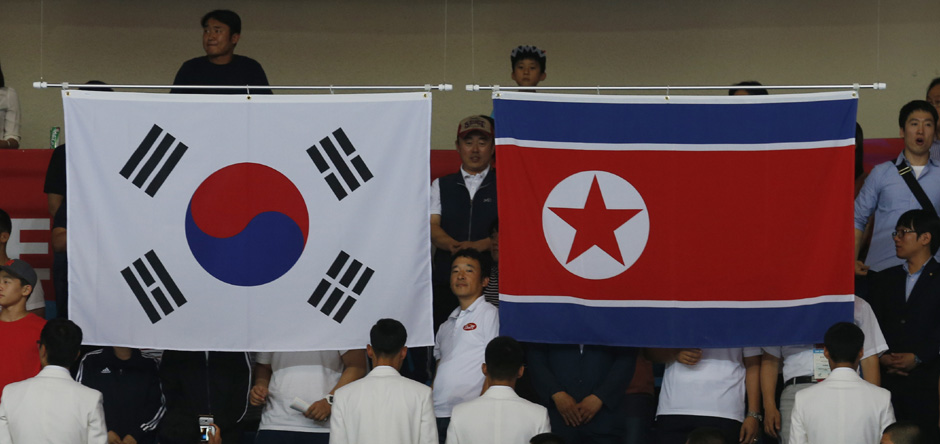
The common thread flowing through these early matchdays of this qualification cycle has been of regional rivalries, much larger than those outside have appreciated; Indonesia v Malaysia for example was barely whispered about. The upcoming Korean derby breaks through that worldwide consciousness, however with relations drawing closer to resolution over the last year, Tuesday’s derby has much more scrutiny put on it than normal.

This will be only the second time ever that South Korea have played in the North Korean capital of Pyongyang, their first competitive outing, having faced their neighbours on neutral territory the last time their paths crossed in qualification. Both teams head into the match in good form on the pitch, boasting 100% records, and having not conceded a goal between them, but outside that the state of play (like much to do with North Korea) is a mystery..

While South Korea’s preparations have been typically public, with coach Paulo Bento speaking quite openly about their priorities heading into this mammoth matchup, the North have remained unsurprisingly quiet, with even the venue kept under wraps until the AFC confirmed the arrangements a few weeks back. They were a shadow of their former selves in the UAE at the turn of the year, falling to three heavy defeats from three at the Asian Cup, but have hit their stride since then, winning the Intercontinental Cup in India over the summer, before picking up solid if only sparingly spectacular wins against Lebanon and Sri Lanka.

Home comforts continue to play a big part in their recent successes in qualification, a matter that they would undoubtedly have been keen on utilising in this upcoming match. What kind of atmosphere will greet the South Koreans is another unknown, but a sellout crowd is highly expected. For many outside observers the pressing issue will be how to view the match; North Korea have regularly shielded coverage of matches, even limiting real time commentary of even FIFA regulated competitive games, it would be in the AFC’s best interests to ensure this one runs transparently.

It comes as North Korean football returns to the forefront of the Asian footballing mind, with domestic champions April 25 making it to the AFC Cup final for the first time in their history. With clamour for coverage expected come the final at the King Il-sung Stadium in early November, the world will be eager to know how far North Korean football has progressed and whether the indications that they were about to integrate into wider society was a sign of what the future may bring or a fleeting statement to appease their political adversaries.

Thursday, 9 June 2016

AFC International Week Focus (June)


It’s been more than 14 months since Asia’s elite nations last had the chance to test their metal with the World’s best in international friendlies, in that time of course we’ve raced through Round 2 of World Cup/Asian Cup qualification, finding out the final 12 in the race for Russia 2018. Alongside this window which saw the very best compete against some of Europe’s finest, of course preparing for their very own continental tournament, we also saw some inter-regional clashes in friendly tournaments and some competitive action for Asia’s minnows facing off in the first round of Asian Cup qualification playoffs.

Asia's Top 10 Friendlies

2014's World Cup was the clearest reminder of how Asia has fallen behind the rest of the world. From now on, if a major Asian nation with World Cup qualification aspirations isn't organising friendlies with Europe's elite during international windows, it's broadly seen as a missed opportunity. Australia have been at the forefront of this, after successfully drawing with Germany last year. This time it was less successful in terms of the results, but again Ange Postecoglou's side came out of their three fixtures with plenty of credit and admiring glances, suggesting a real improvement from 2015's Asian Cup victory.


A narrow defeat to England (1-2) was followed up with a win (1-0) and a defeat (1-2) at home to Greece. Every match had it's positives and negatives, while Postecoglou rolled out both 433/442-diamond formations that have become expected to followers of the Socceroos, while there were numerous debutants with varying levels of success. The next stage as the coach stated himself is to ensure more of his players are moving, and playing regularly in Europe, primed directly at midfielder Aaron Mooy who's likely to leave Melbourne City this summer.

Elsewhere the greatest success story of the week came through Iran, who recorded back to back victories against Macedonia (3-1) and Kyrgyzstan (6-0). Hardly the kind of tests they'd desired, given their Croatia friendly fell through late on, but it was another decent opportunity to illustrate their attacking capabilities, Sardar Azmoun in particular impressing with four goals over the week.

It was a very up and down week for Korea Republic followers, initially getting smashed 6-1 to European champions Spain, before redeeming themselves somewhat with a 2-1 win over Czech Republic. The first result will however linger long in the memory, as this match was promoted as Korea's chance to illustrate how far they'd come under Uli Stielike, having not lost since their Asian Cup final appearance last January. The loss was greeted with disdain, some comparing it to the country's most embarrassing defeat in their history, something that needs to evaporate quickly ahead of their World Cup qualification return.

Also this week, China PR predictably opted to stay at home, as they've been known to for year's of international windows, mainly due to their lack of European based talent. Hence their opposition was at a weaker level, with established nations warming up for their respective continental tournaments. A 4-2 victory over Trinidad & Tabago followed by a shock loss to Kazakhstan does little in inspiring the nation however, especially given their limp progression to WCQ Round 3 in March. Amidst the disappointment strikers Jiang Ning and Zhang Yuning helped their causes with promising displays against T&T. The former notched his fourth in three starts since his return from three years away from the national team setup, while the latter scored a brace and laid on another for Jiang on his debut.

In Kirin Cup action, the first edition of the tournament that included more than two teams taking part in it for 5 years, hosts Japan broadly met current expectations. Facing European sides free from Euro 2016 commitments. Japan waltzed past Bulgaria 7-2, underlining their ability to fly past teams who they dominate possession against, before losing to Bosnia-Herzegovina 2-1 in the final, illustrating some of the same shortfalls that have been present for a while. One being the lack of fighting spirit or physical grit needed to compete against other continents, highlighted by coach Vahid Halilhodzic. It remains the same old story sadly.

Finally, considering the one off friendlies of Asia's elite, Uzbekistan who had their friendly against Equatorial Guinea cancelled earlier in the week went on to taste defeat against Canada in their encounter in Austria, while Qatar, who also traveled to central Europe, despite a promising opening went on to lose 3-1 against Euro 2016 qualified but considerable outsiders Albania.

King’s Cup

Thailand's King's Cup, a regular friendly tournament usually a place for Youth team experimentation felt a much more worthwhile venture this year with fellow WCQ Round 3 qualified nations UAE and Syria alongside a continental Top 10 side Jordan. For one it allowed an interesting look at those outsiders for World Cup qualification, but for another it pitted the West of Asia against Thailand in the East Asians back yard. 


The Thais became eventual victors first avoiding a scare against Syria in the semis, initially losing a 2-0 lead before progressing on penalties, while in the final they eased past Jordan 2-0 for their first title in the event since 2007. Jordan themselves will be happy with their efforts given their devastating exit in World Cup qualification in March, while rebuilding under a home coach such as current caretaker Abdullah Abu Zema, already illustrates the benefits of not extending Harry Redknapp's brief spell in the national team hot seat.

Syria bounced back from defeat on penalties to Thailand by clinching third over UAE. National pride was at stake, if nothing else given both nations were missing key players, however results such as these do offer hope that Syrian expectations in WCQ don't necessarily need to be so low.

AYA Bank Cup

Elsewhere in the region, Myanmar hosted the inaugural AYA Bank Cup in Yangon. Vietnam who made it through to the final with a penalty shoot out win over Hong Kong, clinched the title with style easing past Singapore 3-0 in the final. For the losers it was another disappointing week of football. They did clinch a debut victory for incoming boss Varadaraju Sundramoorthy, however they did do it against the run of play against the hosts in the semi-finals.


Overall it was a case of what could have been for Myanmar, often regarded as a minnow of South East Asian football, they more than competed once again. After cruelly being beaten by Singapore in the semis they eased past Hong Kong 3-0 to clinch third. All four East Asian nations will take part in Asian Cup Qualification Round 3 when the group state returns in March. 

Asian Cup Qualification Playoffs

Speaking of ACQ Round 3, there were still 8 places to be decided, to be determined over two rounds of home/away playoffs, the first of which took place this week. Cambodia, India, Malaysia, Tajikistan and Yemen all clinched their place in March's group stage, while the losers will be given another chance to redeem themselves when they join Bhutan in September/October's second batch of playoffs.


The first tie between Cambodia and Chinese Taipei was broadly seen as a match up of two of the worst sides from WCQ Round 2, however provided one the most entertaining ties of the week. Cambodia's successful 4-2 on aggregate victory after initially clinching a 2-2 draw away in Taiwan can be attributed to a fantastic home support in excess of 50,000 in Phnom Penh. Keo Sokpheng stood out in particular over both matches as a talented wide midfielder, in what was a heated battle on and off the ball.

India went someway to proving their doubters wrong with a comprehensive 7-1 aggregate win over
Laos, including a 6-1 thrashing upon their return home. There was much needed hope in the goal scoring department, something they've relied upon for so long from ageing central striker Sunil Chhetri. A possible successor is within their midst, Jeje Lalpekhlua scored the decisive goal in Vientiane before opening the scoring back in Guwahati.

Effective back-to-back home legs for Malaysia produced the same result, two 3-0 wins over Timor-Leste that assured their progression. While Malaysia looked a side back in full confidence, the state of East Timorese football continues to fall to a new low. Another example of putting their faith in either ageing Brazilian born nationalised players or local teenagers continues to falter. It often looks like a financial situation that contradicts its self, assuming they are paying considerable amounts to fly in Brazilian talent from their club bases across Asia, however they continue to lack the relevant resources, again turning up in fake knockoff Adidas kits for the matches.

On a more pleasing note, Tajikistan look a side that are moving quickly up the gears at the bottom of Asia's international game. A 6-0 aggregate win over Bangladesh was conquered in relatively comfortable fashion, almost branding the return leg in Dhaka as a dead rubber, and so it was played like. They'll go into March's next round of qualification in high hopes, in practice they shouldn't have got themselves in such a state that they needed to go through the playoffs, however the fact they witnessed competitive football during this window will only aid their preparation going forward.

Finally, Yemen lived up to what I've been hoping of them over the last few years, recording dual 2-0 victories "home" and away against Maldives. Their island nation opponents were still getting to grips with losing Ali Ashfaq to impending retirement, while injury would've ruled him out anyway here, while Yemen finally replicated their proficiency in defence in clinical style in front of goal. Their victory ensured that only East Asian sides are left at the wrong end of Asian pyramid, as the next round of playoffs approach. 

Thursday, 10 September 2015

WC/AC Qualifying Review (Round 2 MD3 & 4)


The last week of AFC World Cup/Asian Cup qualifiers has been dominated by questions over the plight of the so-called minnows of the region after a thoroughly destructive day of matches on Thursday saw a number of hidings, including a 15-0 victory over Bhutan for Qatar, a 10-0 win for UAE over Malaysia and a 9-0 slaughtering of Myanmar at the hands of Kuwait. While the initial reaction is that the continent is far too stretched in terms of quality and that something needs to be done to irradiate such humiliation, the fact remains that this is the first cycle of such a format and that these types of matches need to be ridden out if any progress is to be made. Amongst the supposed cavern of ability there were however those players and teams that highly impressed as we head closer to the half way point of Round 2 qualification.

The Player

While there’s been plenty of talk of enlightening stories of overachievement from the likes of Guam and the Philippines during the early days of World Cup Qualification, the progression of Syria has slowly been boiling away under the surface with little attention. This is a telling surprise given when the draw was held earlier this year, Syria became every Asian footballing hipster’s go-to team for a potential outside bet, mainly due to the spearhead of Omar Al-Somah in the Syrian attack. The striker’s subsequent snub of national team duties has tailed off their interest, but Syria have continued unabated since the start of their campaign, much to do with their attacking linchpin Sanharib Malki.

This week was a masterclass in influence from the winger who is capable playing anywhere across the line for Syria. Over the two match days he scored one and assisted four, but for an early penalty miss against Cambodia it would’ve be a blemish free period. His link up play with the younger Syrian generation has been crucial, the likes of Omar Khribin (3 goals so far in qualifying) and Mahmoud Al Mawas (notched his first of the campaign against Cambodia) both found space and converted chances due to Malki’s great vision. His masterclass was truly on hand most pertinently on Thursday, turning round a play that was going nowhere into the winning goal for Khribin over Singapore.

Syria’s consistency in form has seen them continue to the near half way point of the group stage, with a 100% record and without conceding a goal. All this can be given even higher credence, given their home matches are being played outside of the country and the resulting psychological affect it must be having on the players of war within the region that has brought their humanitarian cause into greater focus across the Western world over the last few weeks.

Syria’s final opponent of the first half of the campaign sees them “host” Japan before Afghanistan make the same journey to their adopted home of Muscat in what will be a crucial set of October qualifiers. After observing Singapore’s success in shutting out Japan in August, Syria’s substantially solider defence with an impressive counter headed by Malki could cause a whole load of problems for Halilhodzic’s men next month. All this makes you question if they are truly better off without Al-Somah after all?

The Team

Rebuilding has been the buzz word around Uzbekistan for the last 12 months, and while it’s at times looked a struggle, this week’s action could been seen at least as a partial breakthrough into the process. Samvel Babayan in his first competitive matches as head coach picked up two wins from two to well and truly fling Uzbekistan into Round 3 progression contention after a pretty average start to the campaign last month.

Some of the same struggles that had been felt by the team in the months previous under Mirjalol Qosimov were again on show in their first home match of qualification against Yemen. But for a stunning Aleksandr Geynrikh free kick they could’ve been in further trouble, however early inspiration from the dugout suggests their character. Geynrikh, an Uzbek legend who was back in the squad for the first time in two years was introduced for Server Djeparov at the break going on to make an instant impression in the second half. Many have bemoaned the lack of urgency in refreshing the squad, while Geynrikh is another of the old guard, Babayan’s willingness to shake things up is admirable.

A much improved performance was in store for their second encounter of the week as they refreshingly pushed former group leaders Philippines aside 5-1 in their own back yard amidst horrendous weather conditions in Bulacan. Uzbekistan took no time to steady themselves on a water bathed pitch, making light work of possession and creating their breakthrough via new national team captain Odil Akhmedov. Braces followed for target man Igor Sergeev, who’s well and truly made the centre forward role his own with his incisive runs in behind and towering presence, sandwiched by the same feat from mercurial talent Sardar Rashidov, who conjured two blunderbusses to ensure victory. A stunning display of their true capabilities, Uzbekistan are looking set to meet their lofty ambitions after a stunted start.

The Talking Point

It’s fair to say this has been one of the grimmest weeks in Malaysian football history. A 10-0 humiliation, a managerial resignation and a forced abandoned match all added to a woeful week that leaves Malaysia rooted to the bottom of their qualifying group below the likes of Timor-Leste. Oh to be a follower of the Malayan Tigers at the moment, a desperate position for any Asian football fan, to see a nation of Malaysia’s standing in its own region to fall so far behind the pack, whilst enviably glancing at neighbouring Thailand and Philippines reaping the rewards of careful planning and development.

The 10-0 reverse in the Emirates kick started the nightmare, and even for an observer with no connection with Malaysia, it was incredibly hard watching. Flow after flow, UAE continued to create and finish off chance after chance, notwithstanding the limp defensive efforts of the Malaysian defenders. The desperation shown on the pitch wasn’t isolated to the 11 involved, it transferred onto the bench. Coach Dollah Salleh, who handed his resignation straight after the defeat looked a withdrawn figure on the side-lines, reacting bizarrely throughout including replacing his keeper not once but twice during the 90 minutes in his failed attempts to stop the onslaught.

The performance resulted in an immense outcry from within the country leading to further calls for the axe to be wielded further towards the Sports Minister and FA chief. Their cases weren’t at all helped by Tuesday’s encounter against Saudi Arabia. Given, the improvement in performance was tangible, Malaysia will count themselves unlucky to see it end as it did, they even took the lead during the second half, before the Saudis immediately responded scoring two within 5 minutes to turn around the tie. This was too much for the home Malaysian crowd to take as they turned on the team, raining flares down onto the pitch forcing the game into abandonment. Future sanctions are expected to come their way, with possible stadium bans and/or point deductions to follow.

So where do we go from here? It could be argued that this has been a long overdue wakeup call that requires an extensive root and branch evaluation of the Malaysian footballing set up. When you consider that Malaysia aren’t a side full of amateurs, all are adequately paid in a professional league set up, but their performances have often seen them appear like part-timers. The next coaching appointment is important of course, but the improvement in league structure alongside FA reform maybe the first port of call. The only saving grace, is that come rain or shine Malaysia will still have at the very least a two legged playoff next year to make it through to Round 3 Asian Cup qualification. Whether their performances by the beginning part of 2016 will have improved, it’s looking highly unlikely at the moment.