Showing posts with label FIFA. Show all posts

Wednesday, 9 October 2019

WCQ Preview: Regional derbies headline the week


Round 2 of World Cup Qualification is never a stage that the Asian elite are particularly fond of; either made to play out comfortable victories or suffer from an outsider out to break a record (or over-enthusiastically and inadvertently a star player’s leg). Fans of those sides would have been mildly enthused however with challenging if in the bulk of cases comfortable opening day fixtures, yet October brings around a stark reminder of the sheer breath of Asian football

Matchday 3 four years ago bore witness to 12 home victories from 15 matches played, one mere “upset”, and a combined total of 73 goals scored against 3 conceded. A one sided avalanche of goals and subsequent questions of whether Asia was sailing in the right direction. Unfortunately, the AFC have failed to address the schedule and plumped for another full accumulator friendly set of fixtures that looks to be heading only one way.

While Thursday in the main looks to be a matchday to watch from behind the sofa, there are molecules of interest in the form of some mammoth regional derbies and the plight of some struggling fallen giants to savour, the two calling cards of this early qualification cycle so far. There remains much to see in International Week, you just might have to scratch the surface to find it.

Suzuki Cup final rematch for two of Southeast Asia’s best

It was a concern of many that Group G was never going to live up to the hefty billing it received upon the WCQ draw at AFC House in July, yet the magic fingers of Tim Cahill have sprinkled their magic in Southeast Asia, as this regional super group starts to meander a complex but entertaining path.

So much so, Indonesia, the notable weakest side in the ladder have seen pressure already flung upon their coach Simon McMenemy after their opening day defeat, such is the expectation and regional pride that is at stake. While UAE, the only team from outside the region within the group, under the calculated Bert van Marwijk look to be avoiding such drama, the melee below offers plenty to the neutral.

Thursday’s monumental clash between Vietnam and Malaysia arguably trumps any other match that day, given the pedigree - a rematch of December's Suzuki Cup final, the significance - defeat would shunt either side way behind the progression spots, and the contrast in styles - a clash of two single minded managers.

As was on display 10 months ago, a positive, attack focussed Malaysia under Tan Cheng Hoe, sought the advantage only to be hit by a clever, well organised but reactive Vietnam counter play, a style embedded by their Korean coach Park Hang-seo.

Vietnam have rode a positive year; their second ever regional crown, followed by an impressive Asian Cup campaign with players making some upward switches abroad. Malaysia on the other hand have had to negotiate preliminary WCQs and have already tasted a home defeat at the hands of UAE.

This match has all the hallmarks of a passing of the baton however, from Vietnam to Malaysia as SEA’s primary focus on the continental stage. It should be considered though, as Malaysia have shown so far, while they offer some of the most exciting and brave football on offer anywhere in Asia, their discipline and focus remains off in key moments.

If Park Hang-seo had to handpick a clash of styles, this would be his ideal situation. With Malaysia in the driving seat to take the initiative, Vietnam set as the pouncing cat ready to turn the tables is a fascinating thought. Yet on the flip side; the attacking duo of Syafiq Ahmed & Safawi Rasid flanked by an improving Mohamadou Sumareh could have you out of sight by half time. This game promises to have it all.

Another new dawn for Uzbekistan?

The eternal bridesmaid story of the Uzbekistan national team is one regularly revisited, however another tale of misery and managerial change pits the team in an all too familiar state of uncertainty heading into this week’s World Cup qualification schedule. As soon as one new era under renowned coach Hector Cuper started, it was over, quickly extinguished upon opening day defeat to Palestine last month. After a moderately successful Asian Cup campaign which promised much going forward, the long wait to see the Uzbek national team appear at a World Cup, continues to look like a long distant dream.

For many it was a case of “I told you so.” Cuper’s appointment had a lot to do with his previous role as Egyptian national team coach; having achieved the ultimate goal of the UFA, of qualifying a team for the World Cup. His tactical acumen has regularly come under scrutiny however; for being systematic and cautious, rather than embracing attacking talent. Uzbekistan clearly don’t have a Mohamed Salah in their midst to inspire a chance out of nothing.

That being said the Asian Cup, in brief moments suggested that Cuper may be able to integrate a young cohort of players that have been impressive of late, with those last few exiting members of the previous golden generation. The likes of Eldor Shomurodov were starting to illustrate their true ability on the continental stage, so a seamless transition into early World Cup qualification was treated as an expectation rather than a wish. Uzbekistan’s opening day defeat in Al-Ram inevitably forced his employers hand, and Cuper was swiftly sacked at the first opportunity, leaving the White Wolves playing catch up from bottom spot.

Whether designed or not, Cuper’s successor Vadim Abramov, into his second stint as Uzbekistan boss, is a hopeful one in terms of his ideals. His mantra for attacking play has been applauded, most recently with a young, exciting Bunyodkor team. Defensively he has always been questioned, most prominently in their 6-0 semi final humiliation to Australia in his last match in charge of the national team at the 2011 Asian Cup, one area that’ll not calm national team observers who have witnessed some ropey to say the least defending over the last few months.

Abramov is flanked by legendary Uzbek international Timur Kapadze, who had temporarily taken the reins of the national team ahead of Cuper’s appointment last year. His impact in those brief months suggested he had the ability to deliver the very best out of the young crop of players coming through, and having such a respected head in the dressing room going forward, should allow for an inspirational edge which they’ve been sorely lacking.

While they start from a low point, Group D remains wide open after similar upsets for Saudi Arabia and Palestine leave the ladder in a particularly tentative state. The question of what will change is also up in the air, as Abramov selected a similar looking squad to that of the Cuper regime. Much of the change will only come on the pitch in their intention, and most probably the positioning of Odil Akhmedov, who continues to play an integral role in how play is dictated going forward.

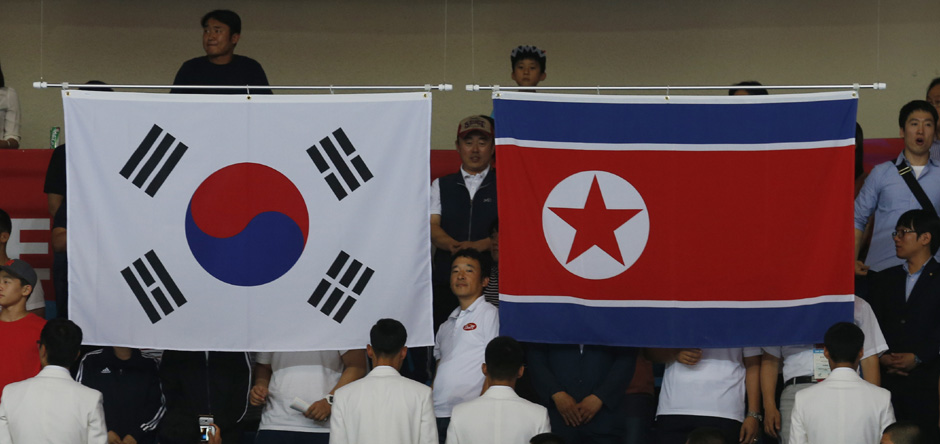
Pyongyang hosts the Korean derby

The common thread flowing through these early matchdays of this qualification cycle has been of regional rivalries, much larger than those outside have appreciated; Indonesia v Malaysia for example was barely whispered about. The upcoming Korean derby breaks through that worldwide consciousness, however with relations drawing closer to resolution over the last year, Tuesday’s derby has much more scrutiny put on it than normal.

This will be only the second time ever that South Korea have played in the North Korean capital of Pyongyang, their first competitive outing, having faced their neighbours on neutral territory the last time their paths crossed in qualification. Both teams head into the match in good form on the pitch, boasting 100% records, and having not conceded a goal between them, but outside that the state of play (like much to do with North Korea) is a mystery..

While South Korea’s preparations have been typically public, with coach Paulo Bento speaking quite openly about their priorities heading into this mammoth matchup, the North have remained unsurprisingly quiet, with even the venue kept under wraps until the AFC confirmed the arrangements a few weeks back. They were a shadow of their former selves in the UAE at the turn of the year, falling to three heavy defeats from three at the Asian Cup, but have hit their stride since then, winning the Intercontinental Cup in India over the summer, before picking up solid if only sparingly spectacular wins against Lebanon and Sri Lanka.

Home comforts continue to play a big part in their recent successes in qualification, a matter that they would undoubtedly have been keen on utilising in this upcoming match. What kind of atmosphere will greet the South Koreans is another unknown, but a sellout crowd is highly expected. For many outside observers the pressing issue will be how to view the match; North Korea have regularly shielded coverage of matches, even limiting real time commentary of even FIFA regulated competitive games, it would be in the AFC’s best interests to ensure this one runs transparently.

It comes as North Korean football returns to the forefront of the Asian footballing mind, with domestic champions April 25 making it to the AFC Cup final for the first time in their history. With clamour for coverage expected come the final at the King Il-sung Stadium in early November, the world will be eager to know how far North Korean football has progressed and whether the indications that they were about to integrate into wider society was a sign of what the future may bring or a fleeting statement to appease their political adversaries.

Tuesday, 12 June 2018

VAR Revisited: Judgement Day Approaches


Thursday will play host of the 21st edition of the FIFA World Cup in Russia, but also the first to use VAR (Video Assistant Referee) technology. After a rough ride since its inception, FIFA’s sometimes blind ambition to pioneer this approach has led to numerous instances of error, confusion and delay that has widely split the footballing fraternity of how best to move forward. A year on from my initial questioning of this approach, I suggest that the early teething pains being felt are more likely to be long term symptoms of a technology that doesn’t quite fit the sport.

From the outset I’ve long been a critic of using video technology in football. Proposing that a categorical decision can be made on matters of opinion has always struck me as merely adding another layer of contention to an already heated arena. The subsequent delay and confusion would also in my opinion damage the essence of why football is so loved.

Off the back of a mixed pilot at the latter end of the 2016/17 Australian A-League season, I detailed a number of failings, highlighting further concerns that needed to be ironed out in the subsequent year ahead of the World Cup. The last 12 months however have done little to suggest this has been achieved.

The decisions up for consideration remain the same; 1) circumstances surrounding goals being scored, 2) penalty decisions, 3) red card incidents and 4) mistaken identity. While the initial pilots experienced quite significant failings in Australia and at the Club World Cup, the full season rollouts were introduced as agreed, in the German Bundesliga, Italian Serie A, Portuguese Primeira Liga, sporadic English FA Cup ties and a full season with the A-League, alongside the FIFA competitions; Confederations Cup, U20 World Cup, Club World Cup and sporadic international friendlies. The testing ground was now vast, but with it came the inevitable hand-in-hand controversies.

The three areas of concern raised last year were the wide interpretation of the rules, the time delay in making the decisions and the behaviour on the pitch, which all had a significant part to play over the last 12 months. However, an additional concern can now be added to the list of snags; that being technological malfunction.

Interpretation

One of football’s enduring qualities has always been its freedom. There’s no steadfast way of playing the game and with it means there’s few laws that can be considered as categorical. While Goal Line Technology (GLT) has developed quickly into being a mainstay of modern football, VAR was always fighting an uphill battle as it considered multiple shades of grey over the unquestionable decision of whether a ball had crossed the goal line or not. 

Last summer’s Confederations Cup, the official warm up for this year’s World Cup had a number of interpretation issues that caused upheaval. Chile were denied a VAR review upon a clear enough looking penalty decision against Portugal in the semi-finals, while they conversely were the beneficiaries in the final when Gonzalo Jara was spared a red card upon an on pitch review for an equally clear elbow on Germany’s Timo Werner. 

Later that year, at December’s Club World Cup, Real Madrid who were affected by the VAR at the previous edition in 2016 were under scrutiny once again. On two occasions during their semi-final with Al-Jazira VAR stirred up confusion; first a goal for Casemiro was ruled out, overturned, then ruled out once more due to an open for interpretation offside decision against Karim Benzema which questioned whether he was interfering with play or not. 

Secondly, Al-Jazira had a goal ruled out for offside, when Mbark Boussoufa was judged to be offside (after a significant delay), again a call that caused debate. After the match Real coach Zinedine Zidane and player Luke Modric spoke of their frustrations of the system, citing their confusion and the scope for interpretation as the technology’s limiting factors.

The issues that VAR highlights tend to become more defined when a supporter’s team is affected, highlighted perfectly by the England national team over the last 12 months. Firstly, Raphael Varane was sent off for France against England in Paris last summer for a soft but likely last man foul on Dele Alli, widely praised in the country as a clear example as to why video technology was first introduced.

Fast forward nine months and the shoe was on the other foot, as England conceded a soft penalty to Italy after VAR intervention. Both decisions were very similar; clumsy but contestable. Predictably however there was outcry on this occasion; as former national team striker Gary Linekar put it England had a “clear and obvious victory taken away” from them. He, like many pundits that night pointed to the rules that state an overturned decision needs to be “clear and obvious”, while in the same year the same group of observers didn’t bat an eye lid at the red card awarded to Varane.

Time Delay 

There have been countless cases where VAR has worked perfectly, either as a sanity check to ensure the referee has made the correct call first time around or to pick up something that was initially missed. However, in plenty of cases this process has been lengthy and often misleading for fans in the ground and broadcasters/viewers around the globe watching on TV.

The most famous example occurred in Germany in April, when a relegation “six pointer” between Mainz and Freiberg descended into farce, as players were brought back out of their half time break to conduct a penalty for an incident that happened a good five minutes ago in the first half. Alongside the impeding logistics of recalling players out of the tunnel (some of whom didn’t even reappear for the penalty to be taken), fans who had made their way downstairs in the ground and TV broadcasts on ad breaks would have critically missed a key part of the action.

Concerning in-play decisions, some calls are also demonstrably time consuming to resolve. Central Coast Mariners midfielder Wout Brama’s eventual red card in the A-League took a whole two minutes, from initial yellow to its eventual upgrading. A short period of time on paper, but as can be attested on video footage a lengthy period that raised tensions on the home bench, particularly with coach Paul Okon.

Behaviour on the pitch

FIFA have taken preemptive action on the behaviour of players calling for a VAR check, insisting any call for such would be punishable by a yellow card. Given the lack of success FIFA and national leagues have had in clamping down on dissent towards referees from all quarters, it’s debatable this extra legislation will have any effect, but at the very least FIFA are accepting changes in behaviour have occurred since VAR’s implementation.

Players and coaches objection to initial decisions and the follow up reversions will be pointed to as passion, part and parcel of the game, but the question clearly is to why bother in introducing a system that exacerbates the debate rather than resolves it? The long term future will pile more pressure on the referees instead of the technology being there to support them, leading to occasions where referees are clearly changing the way they officiate.

In Australia, it has been regularly debated whether officials are often overlooking decisions, as they’ll be picked up by VAR anyway, to ensure a chance isn’t lost in real time play. The opposite happened in last summer’s U20 World Cup final between England and Venezuela. Venezuelan forward Adalberto Penaranda went down in the box under the challenge of Kyle Walker-Peters, which was quickly blown up by the referee as being a penalty.

Upon immediate questioning the referee rushed the decision up to the VAR box, seemingly suggesting, “I couldn’t be sure, but it’s getting checked over,” bringing the updated VAR processes into doubt, as referees are negating their initial job of making the decision on the pitch as they see it.

While the decision was agreed upon, or at least not seen as a “clear and obvious” mistake by the referee, even though from a personal standpoint there looked to be minimal to no contact, the resulting penalty was missed by Venezuela, muting any hard feelings from the England bench. A bullet dodged for the referee and FIFA, but questioning should be directed on the consistency in the use of the technology between individual referees. 

Technology Malfunction 

One aspect I hadn’t considered this time last year, was that the technology wasn’t fit for purpose in the required moment. The comical graphics used by the VAR team behind the FA Cup tie between Huddersfield Town and Manchester United went viral, as Juan Mata was called offside for United, justified by an uneven yellow line across the field. Hawk-Eye, the operators behind the technology put it down to a glitch in the system.

This year’s A-League Grand Final went one step further and saw its VAR system switch off for two minutes. While this could’ve happened another time to little effect, the period in question saw Melbourne Victory score the only goal of the game, despite the television audience being fully aware that James Donachie was offside in the build-up. The outcry was tremendous, but crucially for FIFA isolated in a low key league outside of Europe, but a comparison to a winning goal in the World Cup final would be disastrous. Despite a lengthy explanation citing a technical failure, the FFA have agreed to use VAR in next season’s A-League campaign.

Ironically after the affair, there were calls for the VAR referee in question to be banned from ever taking up the role again, irrespective of his lack of technological expertise. This surely culminates the VAR’s ludicrous moral 360, from introducing technology to take the pressure off referees, we are now calling into question the careers of those using it.

Quite possibly the most bizarre example however, came in Portugal, when a clear offside goal scored by Aves v Boavista in the Portuguese Primeira Liga was missed by the VAR cameras as a supporter’s flag was flown in the way of its sight. Clearly the most surreal incident in VAR’s short history, it’d likely raise a few smirks even from the Boavista fans, if we weren’t used to so many damning clangers in the past.

Throughout all this, FIFA carries on regardless to push their opinion that VAR has been of benefit to those who have introduced it into their competitions. An IFAB report from January suggested decision making has improved, from 93 to 98.9% success rate, yet still the biggest players in club football continue to be unimpressed.

In February, UEFA confirmed that they weren’t going to use VAR in their upcoming Champions League campaign, while the English Premier League followed suit in April stating; “The decision came after comprehensive discussions regarding the progress made in VAR trials in English football and key learnings from the many competitions elsewhere using it.”

It’s probably a wise decision for both organisations to take, given they haven’t yet experienced the crisis moments that FIFA had, back in 2010, where a few clear decisions were missed in South Africa’s staging of the World Cup. But even for those who were initial pushers of VAR, regular use has seen their opinion change.

As we edge towards the biggest football competition in the last four years, the previews have quite sensibly been looking at the players and teams that will hopefully make the headlines come the World Cup final. While I may speak as an unwavering sceptic of VAR, I can’t foresee a scenario where at least one team won’t be negatively impacted by the use of the system however. While question marks and technical bugs continue to hover over it, VAR will always be lurking ready to tarnish the greatest show on earth.

Thursday, 18 May 2017

U20 World Cup Preview (Korea Republic 2017)


Asian football goes through long spells of inward looking, but in one of the few occasions we can really contest the continent’s talent against the rest of the world, the U20 World Cup rolls back into view with high expectations of those competing. In the past, Asia have generally punched above it’s weight in comparison to their senior efforts; Iraq’s impressive run to the semi-finals in 2013 is a recent reminder that Asian national teams can compete with the very best from Europe and South America in the final stages.

2015 in New Zealand was different, and it was easy to foresee from the outset. Alongside debutants Myanmar and Korea DPR, a promising but ultimately inexperienced Qatar side were eliminated at the first hurdle, finishing dead last and winless, bringing back bad memories of the clean sweep of 2014 in Brazil. The one glimmer of hope came through Uzbekistan, who be it fortunately passed through the group stages despite losing 2 of their 3 matches, managed to make it through to the quarter-finals where they lost to a stromg Senegal side.

This year’s edition should provide greater results, if not just for Korea Republic's hosting of the competition (the third time the country has held a World Cup; 2002 - Seniors, 2007 - U17, and 2017 - U20), but for a few reputable big guns of Asian football returning to the fray with a set of impressive squads on paper. Regular senior qualifiers Japan and Iran are joined by Saudi Arabia whose senior side have been the form side of the current World Cup qualification campaign and debutants Vietnam, who may prove to be more than merely there to make up the numbers. With a senior World Cup on the horizon, the coming month in Korea might give us a heads up to how lofty our ambitions should become over the next year.

Korea Republic

Manager: Shin Tae-Yong (KOR)
Qualification: Hosts
U20 WC Group A: Guinea, Argentina, England
Key Men: Lee Seung-Woo, Han Chan-Hee, Cho Youn-Wook


Asia’s leading light for so long at this level, Korea Republic’s regression would have caused greater concern if they weren’t afforded hosting privileges of the World Cup, after failing to qualify via traditional means for the second time in succession, something that hasn’t happened since 1989. Their shock group stage exit at the AFC Under 19 Championships last year (Asia’s qualification mechanism for the U20 World Cup), has hit the football fraternity in Korea hard, with concerns high that further below par performances could put a dampener on their hosting of the event

It’s fair to say however they look a different proposition some 9 months down the line. They immediately sacked the cautious and old fashioned coach Ahn Ik-Soo, replaced by former Olympic coach Shin Tae-Yong. Shin’s appointment has gained mixed reviews; after leading Korea out of a tough group in Brazil last year, Korea succumbed in the latter stages to Honduras. While in addition to this some questionable tactical decisions have left fans divided on his appointment.

Like in Brazil, where Shin could call upon the services of Son Heung-Min, Korea again possess one of the potential stars of the tournament in Lee Seung-Woo. The Barcelona man has been hyped for years as he rises through the La Masia ranks, but the question mark remains whether he can spearhead his country through such a high profile tournament? Alongside Lee (who didn’t partake in the U19s last year), fellow. Barcelona youth Paik Seung-Ho, is tipped to play a key part despite missing out on the action in Bahrain, while Cho Youn-Wook and Han Chan-Hee both look capable players to push Korea through a classically billed “group of death.”

Japan

Manager: Atsushi Uchiyama (JPN)
Qualification: Champions (AFC U19 Championship 2016)
U20 WC Group D: South Africa, Uruguay, Italy
Key Men: Ritsu Doan, Koki Ogawa, Yuta Nakayama

Last year’s two major AFC Youth Championships were comprehensively won by Japan, with their U19 cohort following in the footsteps of their U23s success last January. Every Japanese fan will hope that another false dawn isn’t just around the corner however, after experiencing a bitter blow to their Olympic hopes last year, ending in a miserable group stage exit in Brazil. As is the case in more than one occasion in Asia, talent alone doesn't always meet the expectation of the nation.

The quality at their disposal is up there with the best in the competition though, regular starters at club level, sprinkled with some unknown quantities that could ignite their tournament later down the line. MVP from Bahrain - Ritsu Doan has since grown into a leading light of Japanese football, having broken through with Gamba Osaka this season, scoring his debut continental goal in the AFC Champions League against Adelaide United earlier this month.

In attack, Koki Ogawa flanked by Yuto Iwasaki proved a lethal pairing in their U19s final run in, but instead the headline grabbing squad inclusion comes in the form of yet another East Asian Barcelona product, 15 year old Takefusa Kubo. The second youngest player ever to compete at the tournament, Kubo, has recently made his competitive debut with Tokyo, after being forced to leave La Masia on registration grounds, and is already being dubbed, predictably as the latest “Japanese Messi”. It’s likely that his impact will be restricted to appearing off the bench initially, but with such a strong squad available, Uchiyama’s men have ambitions of going close to matching their class of 99, including Yasuhito Endo and Shinji Ono, that went on to reach a U20 World Cup final.

Saudi Arabia

Manager: Saad Al-Shehri (KSA)
Qualification: Runners-Up (AFC U19 Championship 2016)
U20 WC Group F: Senegal, Ecuador, USA
Key Men: Rakan Al-Samiri, Sami Al-Najai, Abdulrahman Al-Yami

The air of optimism surrounding the senior national team at the moment, brought by Bert van Marwijk, has transcended through to the youth ranks of Saudi football. Saad Al-Shehri’s U19 squad were the most eye-catching side in Bahrain last year, scoring 16 goals, along the way to a narrow penalty shootout defeat to Japan in the tournament's final. In many ways Saudi football has struggled to develop a certain type of player, inventive, direct attacking players have been at a premium, but this squad seems to have developed quite a few to watch closely in that regard.

Diminutive but stocky wide man Rakan Al-Samiri highly impressed in Bahrain, providing both a quick instinct to cut in from the left onto his right foot in tight areas, to look for the killer final ball and to have the reactionary speed to pin back his opposing full back. Captain, Sami Al-Najai who topped the scoring charts last year, albeit mainly from dead ball situations (penalties and free kicks made up 3 of his 4 efforts), is a confident central midfielder with influence to make transitions quickly, in a side that thrives off the counter.

The main concern however is at the other end of the pitch, where Saudi Arabia look pretty weak. The keeping situation looks to be a calamity waiting to happen, with neither of the personnel between the posts in Bahrain coming anywhere near impressing - from an Asian standpoint, a meek keeping display is the last thing we need after 2015’s debacle. Their group on paper also looks tough, possibly not the most illustrious names on paper in the senior game, but all should concern an already fragile looking back line at youth level.

Iran

Manager: Amir Hossein Peiravani (IRI)
Qualification: Semi-finalists (AFC U19 Championship 2016)
U20 WC Group C: Costa Rica, Zambia, Portugal
Key Men: Reza Shekari, Omid Noorafkan, Reza Jafari

Despite missing out on a final appearance in qualification, Iran go into Korea as probably the AFC’s best hope of making it to the latter stages. With a larger amount of senior Iranian players now moving to Europe, the young players have benefitted in kind, with clubs willing to dip straight into the domestic market in search of talent, when previously they were regarded as an unknown risk (take note UAE, this is how to improve your national team).

Of the current squad, Reza Shekari stands out as the prized asset after confirming his transfer from Saipa in the Persian Gulf Pro League to Rostov in the Russian Premier League earlier this month, a club well renowned for fostering Iranian talent, with Sardar Azmoun in particular picking up the plaudits over the last 12 months. Shekari will play at the forefront of a very accomplished midfield, with ACL regular Omid Noorafkan and Mohammad Soltani Mehr providing support behind him.

Comparisons to their senior colleagues are already being compiled; striker Reza Jafari imitates the speed and clinical finishing of Kaveh Rezaei, Abolfazi Razzaghpour offers plenty going forward, from dead ball and wide situations, akin to Mehrdad Pooladi, and Shabab Adeli, who is following down a similar career path at Naft Tehran, looks set to emulate Team Melli keeper Alireza Beiranvand. There are some real gems within this squad, but a greater solidity is needed, especially in defensive situations to contain an improved set of contenders. Looking for their first victory at this level since 1977, they couldn’t be better placed to write their own piece of history in Korea.

Vietnam

Manager: Hoang Anh Tuan (VIE) 
Qualification: Semi-finalists (AFC U19 Championship 2016)
U20 WC Group: New Zealand, France, Honduras
Key Men: Bùi Tiến Dũng, Hồ Minh Dĩ, Doan Van Hau


Playing at their first 11-a-side FIFA event in their history, Vietnam might be forgiven to be purely making up the numbers, given what they’ve achieved so far. While I have worries that they’ll emulate Myanmar’s disastrous debut two years previous, there is an extra killer instinct about this squad, which in the main can rely on regular league experience throughout the squad.

Vietnam’s qualification stage came off the back of a finals place in the South East Asian equivalent the year before, and a follow up 3rd placed finish in the 2016 edition the month prior to the kick off in Bahrain. Subsequent to their semi-final run in the continental U19 showpiece, Vietnam have prepared arguably better than any other at this tournament, playing a number of friendlies since the turn of the year, including a tour of Europe and warm up matches against fellow U20WC qualifiers Vanuatu and Argentina in the last month.

Doubters will point to their performances in Bahrain, which on the whole were submissive, that is until the crucial moments. While they’ll no doubt need to rely on the more than competent looking Bui Tien Dung in net, Vietnam proved that when needed they could force themselves across the line. A last minute winner to beat North Korea in the group stage sealed their passage through to the knockouts, while a clinical winner against the hosts in the quarter-finals despite hanging on for much of the match, showed what they can do in precious moments. While criticised locally for wasting more than the odd opportunity Ha Duc Chinh, proves a handful in attack, while wide men Ho Minh Di and Tran Thanh offer unpredictability in support.

Aside from the teams taking part, FIFA will continue to test solutions to problems that really don’t exist. The VAR initiative which I’ve hotly discussed before is the first of a few changes in Korea, the second being the option of a fourth substitution in extra-time, something that was available but wasn’t called upon at December’s Club World Cup. If ties go all the way to penalties, the so-called “ABBA” sequencing of spot kicks will be deployed, which will involve back-to-back kicks for each team after the opening penalty. With corruption and political interference still rife within Asian and World football, it seems the authorities are more concerned in tinkering with the game we love rather than sorting out their mess behind the scenes.

Thursday, 4 May 2017

VAR: The case against video assistance in football


The future seems inevitable; video technology is set to play an integral part in football for years to come. FIFA have announced the roll-out of their Virtual Assistant Referee (VAR) system at next year's World Cup in Russia, off the back of a trial run at this summer’s Confederations Cup. The testing process has been going on behind the scenes for some time now, but over the last 6 months it’s fully taken flight. A version of which had been trialed at December’s Club World Cup, alongside one off friendly internationals, before Australia became the first “beneficiaries” of the new technology for the latter part of their domestic league program.

With a number of leagues queuing up for the privilege, the German Bundesliga, Saudi Pro League and Major League Soccer will all adopt the system later this year, the feeling is broadly positive for the technology, coming off the back of the highly successful Goal Line Technology (GLT) brought in across many leagues and tournaments, including the English Premier League, 2014’s World Cup and this year’s UEFA Champions League final.

The VAR system clearly differs however from GLT, as it involves less defined decisions, made by a human watching a screen, rather than a black or white decision determining whether a ball has crossed the line or not. The VAR system, which has gone through many trials with different implementations has been trimmed down to exclusively assess the following criteria; 1. Goals, 2. Penalty decisions, 3. Red card incidents & 4. Mistaken identity..

Each criteria (less so to a degree on the final point) has an element of opinion based to it, demonstrated in almost every decision its deployed, which has left me hesitant to view this system as the right direction for football. To my surprise I’m significantly in the minority, with a huge clamour from clubs, referees, pundits and fans for an extra pair of eyes when it comes to match defining decisions. In the short time I’ve experienced the technology through observing it at the Club World Cup and in the latter stages of the A-League, I’ve remained unconvinced that clarity can be provided on a regular basis and in some cases it can make tensions worse, with four shortcomings coming to mind when looking to implement this method going forward.

Interpretation

The area which I believe is the strongest case against VAR technology is that decisions at the end of the day are based on opinions. Even the most obvious calls are still opinions, even if they are roundly agreed with. In the initial stages of planning behind the VAR, examples of clear offsides, atrocious dives and obvious handballs will have been pointed to as the very examples why the VAR system needs to be introduced, effectively to irradiate “the howlers.”

But the VAR calls sadly can't and don’t stop there. Even in it’s infancy, the VAR got embroiled in decisions that even months after the event can be interpreted differently by different viewers. The first call made in a FIFA regulated match, at the Club World Cup between Kashima Antlers and Atletico Nacional brought up plenty of question marks. The call was made that a penalty was to be awarded to the Japanese side, despite strong suggestions that that player involved (Daigo Nishi) was offside and possibly inflicted a foul on his marker in the lead up the incident. 

Opinions were split, some pointed to a poorly implemented offside rule, as the referee interpreted that the offending player wasn’t active. Some pointed to the initial infringement that should’ve resulted in a free kick the other way (something not under the VAR remit). While some agreed with the referee, in that it was a penalty to Kashima. All opinions are valid, but the key to the matter is that the VAR’s debut decision wasn’t nearly as clear cut as FIFA would’ve hoped for.

The latest scenario occurred this last weekend in the A-League Final Series, where Sydney FC took on Perth Glory. Sydney's second goal, scored by Jordy Buijs, was initially ruled out for offside, as his colleague Bobo was adjudged to be interfering in an offside position despite not touching the ball. After a mellay of frustration and confusion, the referee went to the VAR, who overturned the decision, concluding Bobo wasn’t interfering with play. In real time, this left plenty puzzled at what had just happened, leaving two questions; what was the initial call? And why was it overturned?

The scenario was the greyest of greys which essentially came down to whether you thought the defender (Glory's Dino Djulbic) would’ve made up a distance of ground if he wasn’t impeded by the Sydney striker. The commentating team at the time thought he would have (which I agree with), ruling the final call incorrect, while back in the studio former Socceroo great Mark Bosnich took the opposite view. Either way, the initial call was far from a “howler” and questioned the legitimacy of the VAR butting in to effectively re-referee a decision, something the technology was never intended to provide.

Time delay

Probably the biggest bugbear of any technology naysayers is whether the time in which a decision takes is something that can have a detrimental affect on the match being played. The IFAB (the lawmaking body) have assured the VAR process will be swift in its action, to keep the game moving, a process that has been successfully proven by GLT. The examples that have taken place so far involving the VAR have however proved to be anything but smooth.

On a whole, a decision seems to take a minute, from incident to to decision, this was first seen in the clunky effort in Japan at the Club World Cup, where a referee used a monitor at the side of the pitch before awarding the penalty. The process has streamlined somewhat since then, with the referee keeping in touch with a fellow referee in the VAR booth via an earpiece, a change that should in effect allow for a much quicker review.

However, as was the case in the A-League’s debut VAR decision, the first of it’s kind in a top tier domestic league match; in the match between Wellington Phoenix and Sydney, the delay was illustrated to be much longer if the ball is still live. The decision, a handball by a Wellington Phoenix player in their own box was agreeable, but the conversation between referee and the VAR didn’t take place until 30 seconds had passed while the ball was still in play. This situation offers up a temporary in-play state where anything possibly can happen (ie. a goal, a red card etc.) which in the end could be upended if play is called back.

In the end nothing came of a Phoenix breakaway, but it brings into question the emotion change, as the home side went in search for a goal only to then find out they are conceding a penalty at the other end. Even if the play is dead, the seconds/minute delay to double check the findings can suck the atmosphere out of the moment, moments that define football’s worldwide popularity. Cristiano Ronaldo and Filip Holosko have both had to wait agonisingly to see if their goals have stood in the last 6 months, before half-celebrating at the end, as the news trickles through. The heart in the moment stuff that goals in this sport provides you with,will inevitably be lost in a simple 30 second delay.

Behaviour on the pitch

One thing that can’t be certain about bringing itechnology in is the long term behaviour of those in the stadium; players, referees, coaches and fans. GLT experienced little if any teething pains with this, due to it’s clear cut nature. If a player appeals, the referee can point to his watch to categorically answer his critics. With the VAR, no such certainty as I’ve discussed before can be given, which can only lead to lengthier appeals, questioning of officials and raised tensions, all adding to yet further delay in-play.

The A-League were quick to confirm their stance on this; stating that any player/coach appealing for a decision to be reviewed to the VAR would be booked, adding that the initial rounds of its implementation would largely allow players a “get out of jail” free pass as it was a new concept to get used to. However, as we all know confrontation of match officials is regularly a problem the game can’t get away from, so it begs the question if regular non-VAR decisions are regularly being allowed to be contested aggressively, what will stop players contesting to use the VAR?

The A-League elimination finals at the weekend saw multiple examples of confusion, aggravation and abuse from both sets of players pre and post the decisions being reversed. It also didn’t alleviate the pressure from the stands; Sydney FC fans, despite having two decisions reversed by the VAR in their favour, roundly booed the officials leaving the pitch at half-time. We may be going into this hoping it’ll clear up the games’ biggest talking points, but at present it seems to be creating more.

The change in behaviour stretches back from the players and coaching staff to the referees, as has already been seen. Referees in the comfort of having a second opinion in their ear have started to either play it safe or negate their duties altogether. There was an incident at the weekend where referee Peter Green pointed to his earpiece when questioned on a penalty decision, indicating “I haven’t been told it was a penalty,” effectively dodging his role to independently make the call.

How both players and referees view the game and it's decisions will also change. One of the first pieces of advice you are taught when you start to play the game is “play to the whistle”, but in a VAR world how can this still apply? In effect, if a striker sees the offside flag raised, and hears the referee's whistle, does he chance a yellow card for kicking the ball away, against the chance the VAR overturns the decision and he is allowed a shot on goal?

The same goes for the defending team, with VAR decisions now taking action, even when the whistle has blown for offside, if a defender stops as he hears the whistle, does that mean the goal can stand? There are going to be instances where the referee awards a penalty, when the play could continue to a goal scoring opportunity, only to be revoked on review; where’s the advantage there? We may get to the stage, where we regularly hear the whistle go, and play still goes on “just in case” the decision is overruled.

Just the beginning

Given the climate for continual changes to the laws of the game (cite the unnecessary amendment to kick off procedures, and the proposition of sin bins), it’s only going to be a matter of time before further technology is used. Already fans in large numbers have expressed an interest in a challenge based system, as is the case with tennis, where coaches/captains will be able to challenge calls, I’m assuming with the VAR in place, non-penalty box related action that doesn’t involve red cards.

While all in good intention initially, football isn’t the same sport tennis is. While tennis calls are done in the moment where play is stopped, these type of calls in football will demonstrably slow the game down, thus allowing a crucial tactic to kill the game dead. It’s possible to see coaches at all levels of the game, using their “challenge” to engage a timeout scenario, rather than using it purely to contest a call.

At the end of the day, the types of decision that we want clarity over, are the decisions that are the most subjective on the pitch, and in the end are the calls always going to be what we want? Former English Premier League referee Howard Webb, now playing an integral role in the implementation of the VAR in the MLS, appeared on BT Sport Score two weeks back to explain the new system, and it’s suitabilities, eventually to be introduced in England.

After a lengthy and interesting debate with ex-pros on the panel, Webb was called upon in live action to point out where the VAR would be used. It’s involvement was up for discussion quickly, as Hull City striker Omar Niasse was sent off for an overly aggressive challenge against Watford. While the panel of ex-footballers agreed in unison that the challenge shouldn't have seen a straight red. Webb concluded that the decision wouldn't have been overturned, as he wouldn’t be able exercise considerable doubt over the initial decision, to the disbelief of the studio. Ironically, two days later the FA panel overturned the red card.

These incidents are hardly reaffirming the need for video technology in football officiating. Those who back the implementation, will argue that it’s key to clean up a sport littered with missed howlers that need to bring balance back to key matches. However, I argue that bringing in the technology, will create yet another talking point when it comes to officiating, slow the game down and in the end take further attention away from the match being played.

Wednesday, 7 December 2016

Can Jeonbuk break Asia's Club World Cup hoodoo?


The Club World Cup kicks off tomorrow in typically illusive fashion. I almost feel ashamed it’s crept up on me so quickly, yet the marketing for the competition remains low key to say the least. Considering the magnitude that should come with the tag of “World Champions”, FIFA have only really started pushing their highest club accolade in the last week, previously choosing to focus on their new “Best 11” awards series, which narrowly but predictably focuses solely on player’s plying their trade in Europe.

That has long been the issue with the Club World Cup, it doesn’t interest Europe. Its timing is terrible; the tournament kicks off before a European mid-week slot has concluded, it runs through a period where the majority of leagues are still playing competitive league football, but most pertinently the award doesn’t grant the current European champions any extra credibility back home.

Europe has won 8 out of the last 9 competitions, not at a canter by any means, and in most cases they’ve merely strolled through the two matches needed to ensure the title. The only defeat, Chelsea’s to Corinthians in 2012, was met with little criticism given its lack of profile back in Europe. Chelsea could return home ahead of more important matters being their league form, which the whole fan base were more concerned about, without a single eye brow raised across the continent.

For the rest of the world this instead is seen as the key opportunity to test their mettle with the very best, an actual attempt to clinch a sought after global accolade. Within Asia this remains the case. The timing of the tournament is ideally placed for them given the AFC Champions League final was only contested two weeks ago. This year’s champions Jeonbuk Motors, have the run of form, no domestic distraction and the incentive to contest for the trophy.

The gulf in class between Asia and Europe, let alone anyone else and Europe, makes a triumph extremely unlikely however. Even if they were able to make it through, to say the final (something that hasn’t ever happened in the tournament's 16 year history), by beating their European counterparts, little would be made of the achievement in the West. In reality, in this sort of scenario, the European side (Real Madrid) would be seen to have played in 2nd gear, to have put less effort in than necessary, and to be honest that would likely be true.

At the beginning of the year, the Chinese Super League ramped up spending for another transfer window in succession that finally demanded the attention of Europe. The signings were grander than ever before, while players were being swayed in their peak (rather than at the end) of their careers from leading European clubs and no less lucrative deals to ply their trade in a league that continues to be criticised as being below par.

This view is generally accurate, as long as you're comparing par to the standard of a Top 5 European league, the CSL has a long way to go, but with spending set to increase again this year the gap will close, and the question is what will be the yard stick used to plot this decreasing divide? The Club World Cup, at present, if not in the long term with reported plans to create a global Champions League type of format, is the only recognisable “semi-competitive” environment to test clubs against one another from different continents.

Since the increased awareness of Chinese football, with the inevitable scepticism and ignorant slating that comes from the Western media towards this, I rooted for the likes of Guangzhou Evergrande and Jiangsu Suning in this year’s Asian Champions League, to clinch the trophy and set up the intercontinental end of year Battle Royale I’d hope for in Japan this week. I went too far ahead of myself at the prospect, we’re a long way from China competing with Europe, this can be illustrated by both side’s stunted progress in even their initial continental challenge. A football superpower isn't created overnight.

Attention switches to personnel, namely Asia’s leading light in Omar Abdulrahman. Clearly a talent that has outgrown his continent, ready for the test that Europe can offer him. The stumbling block in his way seems to be trust, he’s never going to have Barcelona, Real Madrid or Manchester United come in for him, on the wages he desires, with a first team fast track written into his contract. His nationality stops this to a degree; however talented an Emirati player is, a so called big club isn’t going to roll out anything more than a short term contract on modest wages.

In this case a Neymar-esc shop window at the Club World Cup could be hoped for. When Barcelona cruised past Santos in 2011 to seal their CWC title, Neymar for the most part was a mere spectator, but it was at least a chance for clubs to run the rule over a player against top class opposition. I would never expect Abdulrahman or Al Ain to challenge the likes of Real Madrid, but it could potentially be a bridging opportunity to generate interest in a move.

In the end of course football is played on the pitch by a team of 11 men, merely money thrown in from China or a one man magician in the shape of Abdulrahman is no match for the best all-round team in Asia at the moment, being Jeonbuk Motors. Functional, over any real wow factor, no big names (outside East Asia anyway), but the best unit of the year, the most worthy candidate to take on the rest of the world.

Their draw is tough, they’ve been paired with the CONCACAF champions America of Mexico in the quarter-finals, a hurdle where Asia representation has fallen twice over the last four years. On the other side, being drawn against either the African or Oceania champions has proved an easier route in the past, while aside to Guangzhou last year (which conveniently was against America also), Asia have usually been one step behind their North American equivalent.

It would however set up the glamour tie that all Asia wants; an encounter with UEFA Champions League winners Real Madrid. Putting aside the fact we won’t have the chance of an intriguing battle of new money vs. old money, or Amoory vs. CR7, Jeonbuk v Real still offers something, if not too much promise. Until one of these matches, however fortunately it may come, falls for the underdogs, I think we’ll continually hear snobbery at the culmination of the end of year showpiece, which is continually ignored across Europe. I’ll be left with hope though, however small, that this could this be the year Asia makes it's way to the final.

Friday, 22 May 2015

U20 World Cup Preview (New Zealand 2015)


As all manner of domestic leagues come to a close, excitement builds for the return of international football starting with the Under 20 World Cup in New Zealand. The Asian contenders that qualified via last year’s Under 19 AFC Championship may instantly look out of the ordinary, the lack of any of the big 5 senior national sides of Japan, Iran, Australia, Korea Republic and UAE maybe surprising, but all were put to the sword during the tournament in Myanmar. The hosts, who enter the Youth World Cup for the first time in their history alongside previous minnows Qatar and Korea DPR are making a real forward burst in terms of youth development as they eye a bright future for their seniors.

Qatar

Manager: Felix Sanchez (ESP)
Qualification: Champions (AFC U19 Championship 2014)
U20 WC Group: C – Colombia, Portugal, Senegal
Key Men: Ahmed Al-Sadi, Yousef Hassan, Ahmed Doozandeh

They might have snuck in somewhat under the radar, but the performances of the Qatari youth squad will no doubt be one of the main talking points come the final, however they play. Much is expected of all youth squads going into the tournament, but Qatar’s particular interest will be heightened given this age group will be hoped to form their home World Cup squad in 2022. The entire squad lays on the foundations formed by the impressive but at times controversial Aspire Academy that continues to grow in providence with every given youth tournament.


Qatar go into the tournament in fine fettle, with arguably the strongest man for man U20 squad on the continent. The quality of attacking play was their key attribute in clinching their first ever U19 AFC Championship title last year. Much of their most impressive play came on the counter, in particular through the pacey and clinical Ahmed Al-Sadi from the right, while KAS Eupen based compatriot Ahmed Doozandeh dictates their play from deep. Their depth in quality proved crucial to push them over the finishing line, captured finely by super substitute Akram Afif, who climbed off the bench 5 times to score 4 goals in the tournament, including the winner in their final victory over North Korea.

Korea DPR

Manager: An Ye-Gun (PRK)
Qualification: Runners-Up (AFC U19 Championship 2014)
U20 WC Group: E – Brazil, Hungary, Nigeria
Key Men: Jo Kwang-Myong, Kang Nam-Gwon, So Jong-Hyok

Alongside Qatar, Korea DPR are looking to build on their dominance in a range of Asian youth competitions; picking up a silver medal at the Asia Games, the AFC U16 Championship title alongside their final appearance at U19 level which ensured qualification to New Zealand. While their senior squad continues to flounder against the very best on the continent, the increase in quality at their (typically secretive) home academies continues to threaten their rivals. Their penalty shootout victory over Japan in Myanmar came as a big surprise to those outside of the country but over the course of play proved deserving. Korea DPR will once again go into a tournament with little being expected of them.


The Koreans play some of the most attractive passing football of all the Asian sides travelling to New Zealand. Their fluidity runs through to their personnel on the pitch which regularly switches depending on their adopted approach. In Myanmar, the technically gifted Jo Kwang-Myong impressed the most, drifting in from the left wing, firing 5 goals during the tournament. Alongside Korea’s other attacking options Jo breaks from deep linking up well with the physically imposing Kim Yu-Song who holds the ball up impressively. The one area of concern could be in defence where the Koreans at times looked fragile, Cha Jong-Hun between the sticks particularly looked shaky.

Myanmar

Manager: Gerd Zeise (GER)
Qualification: Semi-Finalists (AFC U19 Championship 2014)
U20 WC Group: A – New Zealand (Hosts), Ukraine, USA
Key Men: Nyein Chan Aung, Aung Thu, Nanda Kyaw

Underdogs in all ways, the coming months are going to be used to enhance experience rather than claim silverware for Myanmar. They qualified for their first ever U20 World Cup, after making it through to the semi-finals at their home U19 Championship, however away from home could prove a little more difficult to manage. While they pushed Qatar to extra-time in their semi-exit, the general feeling from the neutrals watching was that they’d be hampered without the partisan support they received throughout the tournament.


Passion of course was key to their success, which spurred on a team ethic that turned around  performances that were ebbing away from them. It might be a cliché to point to the physical disadvantage South East Asians have over their competiters, but it was clearly highlighted when the squads were announced this week. Myanmar have named 14 players who fall under 5’7’’, while Asian compatriots Uzbekistan named no one under the same height. What they lack in that department they make up in their technical ability, which is a clear improvement on previous tournament squads. Attacking midfielder Nyein Chan Aung in behind Aung Thu provide an attractive tandem that will threaten their more accomplished (on paper anyway) opposition.

Uzbekistan

Manager: Ravshan Khaydarov (UZB)
Qualification: Semi-Finalists (AFC U19 Championship 2014)
U20 WC Group: F – Fiji, Germany, Honduras
Key Men: Zabikhillo Urinboev, Dostonbek Tursunov, Javokhir Sokhibov


Uzbek football is going through a slump in form of late, after a mediocre Asian Cup exit in January was followed by an exhaustive sweep of all four of their competitors from the Asian Champions League group stage. One crumb of inspiration has come from their need to revitalise the national team, currently set up with many of the regulars coming towards the end of their careers. A solid performance in Myanmar last year saw their U19 side make it through to the semi-finals, and thanks to a relatively favourable group World Cup draw, offers them hope to make it through to the knockout phase in New Zealand.


An advantage that they possess over their competitors both in Asia and at the forthcoming World Cup, is that they already possess players achieving minutes at a high standard both domestically and on the continent. Midfielder Javokhir Sokhibov has made the breakthrough with Pakhtakor of late, while striker Dostonbek Khamdamov is now a regular with Bunyodkor, with both players playing substantial parts against Asia’s top club sides in the Asian Champions League. Alongside their experience, hot shot Zabikhillo Urinboev who topped the scoring charts in Myanmar after appearing at the last Youth World Cup will pose the greatest threat for the Uzbeks. His target man frame makes him an easy out ball, but he’s also illustrated his ability on the floor in and around the opposing penalty area.

Tuesday, 24 March 2015

Asia kicks back into gear for a new international cycle


Some two months after Australia lifted their first Asian Cup title, it all gets going once again in Asia for a new international cycle which will be welcomed by some but not by many in a broadly depressing environment for the continents footballing nations. Asia’s international calendar is one of extremes, packing in two major tournaments (World & Asian Cups) within a narrow 9 month corridor before embarking on a 2 year long qualifying procedure for both competitions, dragging out and rarely producing any real quality until its climax.
 
For many in search of redemption this offers valuable experimentation and possible improvement, most pertinently felt by Asia’s standout underperformers of the last year; Japan. A winless exit in Brazil last summer which saw Alberto Zaccheroni lose his previously secure seat was miserably followed up with a listless quarter final exit in Australia. Another tournament down, another manager, in this case Javier Aguirre exited under a black cloud of controversy given the match fixing allegations being aimed in the Mexican’s direction.
 
The new incumbent of the hotter than most seat is the widely admired Vahid Halilhodzic, who performed admirably with Algeria at the last World Cup. Whether he can truly turn around the fortunes of arguably the continent’s most talented squad is unlikely to be seen for years but on paper at least it looks a favourable appointment. In all likelihood the next 12 months are going to be spent at a pedestrian pace given the lack in quality of opponents lined up, offering Halilhodzic the perfect opportunity to blood a new generation of players ahead of Russia’s World Cup in 2018.
 
Nothing could be further from Japan’s plight than that of Australia. A nation who despite a miserable lead up, stuck firm with their coach Ange Postecoglou in promise of a marked improvement at their home Asian Cup, and how that improvement was delivered. While Japan are seeking to appease their demanding fan base, Australia are already looking forward at going one step further and markedly make an impression against Europe’s finest. They kick off the cycle with a friendly tour of Europe including one of the highlights of the March international window, facing World champions Germany in their own backyard.
 
Postecoglou’s response to earlier concerns over form was that his side were still developing, which in hindsight looks calculated and now heavily beneficial given his side goes into the new cycle hungry and in little need of refreshing. The new Socceroo structure starting with Mat Ryan, through Trent Sainsbury and Massimo Luongo to Matt Leckie is now well developed to suceed at the next World Cup, however centre forward remains an area that needs to be refreshed in the coming year. Tim Cahill continues on for now, but focus will shift onto the likes of Tomi Juric and Nathan Burns to grasp their opportunity in the limelight.
 
Australia’s performance and ultimate result in Germany on the face of it may be seen as an isolated foray into Europe but should be cheered on not just back at home in Oz, but across the whole of Asia. A winless World Cup for all Asian nations in Brazil won’t have gone by unnoticed by the FIFA hierarchy ahead of a roughly contested presidential battle. In simple terms Asia need to make an impression on the outside footballing community sooner rather than later if they’re to continue to cling on to their valuable 4.5 slots for World Cup qualification. 

For years Africa have petitioned for a greater number of slots, while the emergence in form of CONCACAF in Brazil has led many to believe that the AFC would be the federation to be hit the hardest by any changes to FIFA’s World Cup portion control. News coming out of UEFA in the last week suggesting Europe’s number of slots could be raised ahead of Russia has rung alarm bells that this could be a much quicker change than any Asian football observer had ever considered.
 
One criticism behind AFC nations going into worldwide competitions has always been the organisation behind the scenes of the federations, which yet again has reared its ugly head in Iran. The IFF are once more engaged in temperamental talks with their Portuguese coach Carlos Queiroz, who not for the first time has threatened to leave his post due to “external pressures”. Another nation in a managerial crisis of their very own is neighbouring Iraq, who appointed Akram Salman as their new coach to widespread condemnation in succession to the popular and forward thinking Radhi Shenaishil who led them to the Asian Cup semi-finals. Salman’s introduction has many Iraqis believing that their impressive young squad is bound to take a backwards step after such a promising couple of months at the start of the year.
 
It’s not all doom and gloom across the board by any means; China PR came out of the Asian Cup in high spirits and have also made great strides into the club game, with their clubs sides progressing well at the start of the AFC Champions League group stage. Similarly UAE are starting to build their reputation outside the region and have committed their in-demand coach Mahdi Ali to a long term deal in hope and growing expectation of their first World Cup appearance in over a decade.
 
While sights are firmly focused in the future for most, there is still plenty to fight for in the short term as the final seeded spot for World Cup/Asian Cup qualifying goes up for grabs in the coming weeks. Oman, Iraq and Saudi Arabia are all possible candidates in need of crucial ranking points to sneak a favourable rank for next month’s qualifying draw, however none go into this month’s international window in the greatest of mind sets. Saudi Arabia have been particularly subdued. Cosmin Olariou’s departure from his temporary charge after the Asian Cup leaves them without a full time leader going into a crucial week of point chasing.
 
Elsewhere Korea Republic are looking to gain a head of steam after an almost faultless Asian Cup campaign. Ever since taking over, Uli Stielike has cemented a rigid core to the side which has provided defensive stability but may need an extra flourish in attacking areas to make a real impact outside the region. Attempts to get the best out of talisman Son Heung-Min remains an obvious target, however focus should be shone on leading forward Lee Jeong-Hyeop, with many questioning whether his surge in form from Australia can be anything more than a flash in the pan.
 
This coming week in general offers a first glimpse of the future of Asian international football after what has been a pretty disastrous outgoing cycle. It does however give the elite AFC nations at least, their final chance of facing opponents from outside Asia for another 12 months. While Japan and Korea Republic have decided to sidestep the opportunity to test themselves fully, the likes of Australia, Iran and Qatar should be praised for putting themselves out there in pursuit of improvement. Let’s all hope in four years’ time we’re talking about the rapid rise of Asian international football rather than it’s meagre decline that’s currently on display for the whole world to see.