Showing posts with label Korea DPR. Show all posts

Wednesday, 9 October 2019

WCQ Preview: Regional derbies headline the week


Round 2 of World Cup Qualification is never a stage that the Asian elite are particularly fond of; either made to play out comfortable victories or suffer from an outsider out to break a record (or over-enthusiastically and inadvertently a star player’s leg). Fans of those sides would have been mildly enthused however with challenging if in the bulk of cases comfortable opening day fixtures, yet October brings around a stark reminder of the sheer breath of Asian football

Matchday 3 four years ago bore witness to 12 home victories from 15 matches played, one mere “upset”, and a combined total of 73 goals scored against 3 conceded. A one sided avalanche of goals and subsequent questions of whether Asia was sailing in the right direction. Unfortunately, the AFC have failed to address the schedule and plumped for another full accumulator friendly set of fixtures that looks to be heading only one way.

While Thursday in the main looks to be a matchday to watch from behind the sofa, there are molecules of interest in the form of some mammoth regional derbies and the plight of some struggling fallen giants to savour, the two calling cards of this early qualification cycle so far. There remains much to see in International Week, you just might have to scratch the surface to find it.

Suzuki Cup final rematch for two of Southeast Asia’s best

It was a concern of many that Group G was never going to live up to the hefty billing it received upon the WCQ draw at AFC House in July, yet the magic fingers of Tim Cahill have sprinkled their magic in Southeast Asia, as this regional super group starts to meander a complex but entertaining path.

So much so, Indonesia, the notable weakest side in the ladder have seen pressure already flung upon their coach Simon McMenemy after their opening day defeat, such is the expectation and regional pride that is at stake. While UAE, the only team from outside the region within the group, under the calculated Bert van Marwijk look to be avoiding such drama, the melee below offers plenty to the neutral.

Thursday’s monumental clash between Vietnam and Malaysia arguably trumps any other match that day, given the pedigree - a rematch of December's Suzuki Cup final, the significance - defeat would shunt either side way behind the progression spots, and the contrast in styles - a clash of two single minded managers.

As was on display 10 months ago, a positive, attack focussed Malaysia under Tan Cheng Hoe, sought the advantage only to be hit by a clever, well organised but reactive Vietnam counter play, a style embedded by their Korean coach Park Hang-seo.

Vietnam have rode a positive year; their second ever regional crown, followed by an impressive Asian Cup campaign with players making some upward switches abroad. Malaysia on the other hand have had to negotiate preliminary WCQs and have already tasted a home defeat at the hands of UAE.

This match has all the hallmarks of a passing of the baton however, from Vietnam to Malaysia as SEA’s primary focus on the continental stage. It should be considered though, as Malaysia have shown so far, while they offer some of the most exciting and brave football on offer anywhere in Asia, their discipline and focus remains off in key moments.

If Park Hang-seo had to handpick a clash of styles, this would be his ideal situation. With Malaysia in the driving seat to take the initiative, Vietnam set as the pouncing cat ready to turn the tables is a fascinating thought. Yet on the flip side; the attacking duo of Syafiq Ahmed & Safawi Rasid flanked by an improving Mohamadou Sumareh could have you out of sight by half time. This game promises to have it all.

Another new dawn for Uzbekistan?

The eternal bridesmaid story of the Uzbekistan national team is one regularly revisited, however another tale of misery and managerial change pits the team in an all too familiar state of uncertainty heading into this week’s World Cup qualification schedule. As soon as one new era under renowned coach Hector Cuper started, it was over, quickly extinguished upon opening day defeat to Palestine last month. After a moderately successful Asian Cup campaign which promised much going forward, the long wait to see the Uzbek national team appear at a World Cup, continues to look like a long distant dream.

For many it was a case of “I told you so.” Cuper’s appointment had a lot to do with his previous role as Egyptian national team coach; having achieved the ultimate goal of the UFA, of qualifying a team for the World Cup. His tactical acumen has regularly come under scrutiny however; for being systematic and cautious, rather than embracing attacking talent. Uzbekistan clearly don’t have a Mohamed Salah in their midst to inspire a chance out of nothing.

That being said the Asian Cup, in brief moments suggested that Cuper may be able to integrate a young cohort of players that have been impressive of late, with those last few exiting members of the previous golden generation. The likes of Eldor Shomurodov were starting to illustrate their true ability on the continental stage, so a seamless transition into early World Cup qualification was treated as an expectation rather than a wish. Uzbekistan’s opening day defeat in Al-Ram inevitably forced his employers hand, and Cuper was swiftly sacked at the first opportunity, leaving the White Wolves playing catch up from bottom spot.

Whether designed or not, Cuper’s successor Vadim Abramov, into his second stint as Uzbekistan boss, is a hopeful one in terms of his ideals. His mantra for attacking play has been applauded, most recently with a young, exciting Bunyodkor team. Defensively he has always been questioned, most prominently in their 6-0 semi final humiliation to Australia in his last match in charge of the national team at the 2011 Asian Cup, one area that’ll not calm national team observers who have witnessed some ropey to say the least defending over the last few months.

Abramov is flanked by legendary Uzbek international Timur Kapadze, who had temporarily taken the reins of the national team ahead of Cuper’s appointment last year. His impact in those brief months suggested he had the ability to deliver the very best out of the young crop of players coming through, and having such a respected head in the dressing room going forward, should allow for an inspirational edge which they’ve been sorely lacking.

While they start from a low point, Group D remains wide open after similar upsets for Saudi Arabia and Palestine leave the ladder in a particularly tentative state. The question of what will change is also up in the air, as Abramov selected a similar looking squad to that of the Cuper regime. Much of the change will only come on the pitch in their intention, and most probably the positioning of Odil Akhmedov, who continues to play an integral role in how play is dictated going forward.

Pyongyang hosts the Korean derby

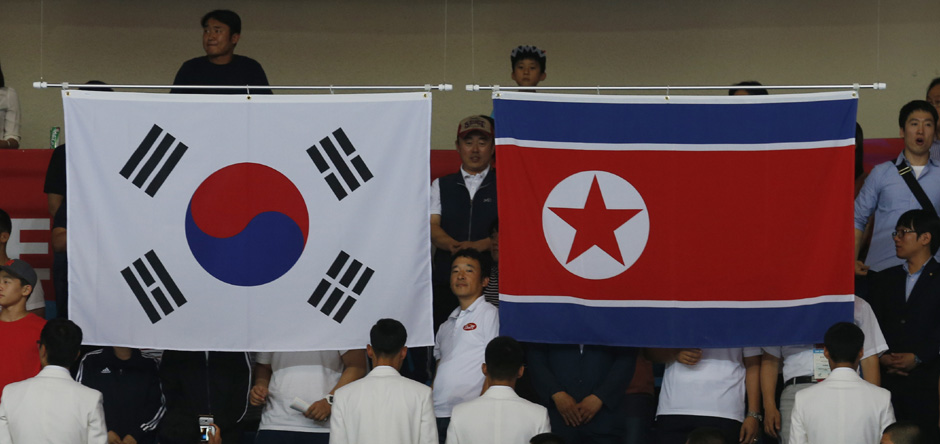
The common thread flowing through these early matchdays of this qualification cycle has been of regional rivalries, much larger than those outside have appreciated; Indonesia v Malaysia for example was barely whispered about. The upcoming Korean derby breaks through that worldwide consciousness, however with relations drawing closer to resolution over the last year, Tuesday’s derby has much more scrutiny put on it than normal.

This will be only the second time ever that South Korea have played in the North Korean capital of Pyongyang, their first competitive outing, having faced their neighbours on neutral territory the last time their paths crossed in qualification. Both teams head into the match in good form on the pitch, boasting 100% records, and having not conceded a goal between them, but outside that the state of play (like much to do with North Korea) is a mystery..

While South Korea’s preparations have been typically public, with coach Paulo Bento speaking quite openly about their priorities heading into this mammoth matchup, the North have remained unsurprisingly quiet, with even the venue kept under wraps until the AFC confirmed the arrangements a few weeks back. They were a shadow of their former selves in the UAE at the turn of the year, falling to three heavy defeats from three at the Asian Cup, but have hit their stride since then, winning the Intercontinental Cup in India over the summer, before picking up solid if only sparingly spectacular wins against Lebanon and Sri Lanka.

Home comforts continue to play a big part in their recent successes in qualification, a matter that they would undoubtedly have been keen on utilising in this upcoming match. What kind of atmosphere will greet the South Koreans is another unknown, but a sellout crowd is highly expected. For many outside observers the pressing issue will be how to view the match; North Korea have regularly shielded coverage of matches, even limiting real time commentary of even FIFA regulated competitive games, it would be in the AFC’s best interests to ensure this one runs transparently.

It comes as North Korean football returns to the forefront of the Asian footballing mind, with domestic champions April 25 making it to the AFC Cup final for the first time in their history. With clamour for coverage expected come the final at the King Il-sung Stadium in early November, the world will be eager to know how far North Korean football has progressed and whether the indications that they were about to integrate into wider society was a sign of what the future may bring or a fleeting statement to appease their political adversaries.

Thursday, 20 December 2018

Asian Cup 2019: North Korea (Preview)


With the days of mystery and state secrecy slowly drawing to a close, North Korea head to the Emirates, as well known as they’ve ever been. With players seeking outposts in Europe, domestic teams succeeding in AFC competition, not to mention a greater dialogue politically with its neighbours, North Korea is starting to bring itself into the Asian football consciousness. While the spotlight has been lit, a change of management on the run up to the tournament is likely to see them continue to reinforce some long-held stereotypes.

Throughout the last cycle, North Korean football emerged from underneath a rock. A competitive schedule coupled with technological advances have allowed outsiders to watch more games than has ever been possible before. Opening the onlooking world to the sight of uniform attendance at the Kim Il-Sung Stadium Pyongyang, supplemented with the equally orchestrated travelling (or purposely shipped in) away support, most striking in Qatar for their away match with Yemen to start qualification.

It gave us the chance to truly assess the football being developed in the country, long eulogised as defensive, workmanlike and devoid of artistic attacking play, recently borne out of their infamous World Cup appearance in 2010. Instead, we saw balance, a team that could compete at both ends of the pitch, at home and away. A modern side, with players capable of making the leap outside of the national league.

The emergence during qualification of national team captain Jong Il Gwan was a revelation. The wide forward, has been a breath of fresh air, who took on individual responsibility and thrived off it. His move last summer to Luzern in Switzerland spurred a generation of North Korean players on to widen their prospects. The current squad now consists of players playing their football in Austria, Italy, Japan and Cambodia, and while the bulk of the team remains home based, the style of football has developed considerably.

Employing a foreign coach had much to do with this. The appointment of Norwegian coach Jorn Andersen, the first foreigner in charge of North Korea since the 1990s, brought with it an adventurous shift in approach that looked to dictate attacking play. Results including a 2-2 draw with Lebanon, back to back 4-1 wins against Malaysia, and a 1-1 draw in Hong Kong, were matches that saw Korea set up around their new-found strength, through an unassuming attack that’s still bubbling under the radar.


To supplement Jong Il Gwan’s initiative from outside, Pak Kwang Ryong, who’s developed a substantial CV over his career in central Europe, is a focal point to play off. The goals of Kim Yu Song, scoring six in the final qualification stage, has been another example of the array of talent North Korea can offer in attacking areas.

Then there’s the prospect of 20-year-old Han Kwang Song, the first North Korean player to play, and then score in Italy’s Serie A. Han alludes to a greater talent pool yet to be unearthed going into a new World Cup cycle, making this January’s Asian Cup, ever more important to signal-post development in the country’s game.

A wounding blow came upon qualification however, as Andersen ended his tenure with North Korea. Outside funding is often limited, given the heavy sanctions put on their domestic government, meaning the DPRK FA had to cut their cloth accordingly; Andersen’s contract wasn’t renewed. The result is likely to see Korea return to type, as Kim Yong Jun, a rookie coach, but an experienced domestic player who featured in their most recent World Cup outing in South Africa enters to fill Andersen’s sizeable shoes. Initial outings have seen Kim look to predominantly home-based call ups, too often deploying the ultra-defensive tactics of old, including the return of the flattest of back fives on occasion.

November’s East Asian Cup qualification failure suggests that the progress under Andersen has somewhat stalled. While they returned from Taipei unbeaten, failing to either overcome a Hong Kong side they bettered in Asian Cup qualification, or put the hosts Taiwan to the sword by a greater score line in the final matchday, meant the Koreans failed to make the East Asian Cup finals for the first time in five years, an early hammer blow to Kim’s fledgling managerial career.

Expectations heading into the Asian Cup, at least from anyone outside the country will be realistically modest. Having failed to make it out the group stage since the 1980s, without recording a victory in that time, recent results hardly suggest things will change. They’ll be up against also, drawing the likes of Saudi Arabia and Qatar, two sides who have had promising transitional periods of late. While recent history suggests (losing 5-0 in Beirut last October), Lebanon are a notch ahead at present as well.

Judging the progress of North Korean football by their results and performances due to be showcased in the Emirates, would be underselling the progress Andersen achieved over his tenure. Regrettably we’ll likely see an untested, predominantly domestic based squad come January, a return to the start of a new phase, rather than a true test of the last four years. An interesting side note will instead assess which direction they go next; whether Kim sets up his side to play expansive attacking football, as was regularly the case under Andersen or retreat to their ambitions of old.

Key Men

Head Coach - Kim Yong Jun

Former international midfielder, who featured in North Korea’s infamous 7-0 reverse to Portugal at the 2010 World Cup. Has been brought in to finish the job of Norwegian Jorn Anderson who qualified the team for the Asian Cup. Has already alluded to returning to a more defensive set up than that of his predecessor.

Star Player - Jong Il Gwan

The most dependable attacking outlet North Korea has had over the last few seasons, Jong, now skipper of the national team provides creation and an end product from wide left and the work rate to press from the front. Has struggled domestically since moving to Switzerland two summers back, and will be looking for a new club to impress come January.

Under Pressure - Pak Kwang Ryong

Physical target man who has played in Europe his entire career, mainly in Switzerland but most recently Austria, has rarely illustrated his undoubted talent with the national team. Now, with a number of players plying their trade outside of North Korea, his place at the sharp end of their attack for once won’t be considered a sure thing.

Young Prospect - Han Kwang Song

Became the first North Korean to play in Serie A, when he made his debut as an 18-year-old for Cagliari before having an impressive goal scoring campaign with Perugia in Serie B last season. Has only just come into the senior national team fold towards the end of qualification and should provide stiff competition in an already strong area of the pitch for the Koreans.

Friday, 31 July 2015

East Asian Cup 2015 - SFG Team Previews


The EAFF East Asian Cup kicks off in China on the 1st August, and while the squads involved are stripped of the European based stars for the 4 team round robin tournament, the event will give us a greater insight into the manager’s plans for the upcoming World Cup qualifiers and which domestic gems are set to break into the national team picture over the long run.

I’ve put together a number of previews of the competing nations for Asian football blog Sandals for Goalposts, exploring the key questions and players that we’ll be keeping an eye out for. Keep posted to their website and twitter feed for more on the tournament throughout the coming weeks.


--- Follow @Sandal4Goalpost --- Visit sandalsforgoalposts.com ---

Thursday, 18 June 2015

WC/AC Qualifying Review (Round 2 MD1 & 2)


The return to World Cup qualifying is a welcome one, given the mediocre footballing landscape currently being felt in the Asian game. The lacklustre winless exit in last summer’s World Cup still lingers in the mind, which many hope can be put to bed with a marked improvement in qualifying for the 2018 edition in Russia. The first week of matches pulled up a number of surprises along with plenty of headline grabbing “minnow” victories that has already put to bed claims that this format would produce uneventful ties. Looking back on the week, here’s a profile of those players, teams and issues that stood out the most.

The Player

When the draw was made back in April, Group H stood out from the start, as you could feasibly make a case for any of the 5 participating teams to make a true impact on the section. Through the first two match days the observation has become reality, with the achievements of the Philippines heading the bill with two impressive victories over Bahrain and Yemen. One man stood out more than any other, that being right winger Misagh Bahadoran who notched a goal in each tie and also contributed heavily in both encounters despite starting initially on the bench.


Bahadoran’s international career has so far come in fits and starts as he's struggled arguably right up until this last week to nail down a starting spot. His merits have always been there to see, his pace and direct approach play are always a threat, but he’s often missed out due to a lack of cutting edge in the attacking third, a key trait needed in a side that has developed a wealth of attacking potency. While Bahadoran started on the bench against Bahrain, his impact was ultimately telling when called upon after replacing the injured Stephen Schrock in the first half. Midway through the second period he stole a march on the Bahraini defence to nip in at the far post to poke in a terrific delivery from Filipino talisman Phil Younghusband. He went on to nearly bag a second to put the tie to bed, only to be denied initially by some last ditch defending before fellow attacker Javier Patino smashed in the rebound.

A few days later when Bahadoran appeared from the start against Yemen, Patino repaid the favour, linking up well with the winger before Bahadoran pulled off an audacious pirouette, finished off by firing in at the near post, one of the goals of the week. The winger of Iranian descent continued to threaten the Yemeni defence, building on his confidence when taking on man after man before being recalled for usual stalwart Patrick Reichalt from the bench later in the game. Next up, Uzbekistan, a side looking a little weak at present, something the former Futsal playing winger Bahadoran will be looking to exploit in September.

The Team

There were plenty of worthy candidates for Team of the Week, from a history making Guam side through to Samurai Blue tamers Singapore, but the rapid rate of improvement in such a small space of time edges Korea DPR’s back to back victories above all. Victories in Yemen and at home to Group G’s favoured opposition Uzbekistan see Korea line up with the Philippines at the top of the section and in incredible form ahead of a satisfying summer break for them.


This side may look similar to that that mainly struggled a few months ago, however the marked escalation in form is to be admired given their miserable winless record in Australia at the Asian Cup. There, Korea faced Uzbekistan, a side they rarely threatened on the counter and were lucky to come away with the narrow loss they did. Five months later and Korea stormed out of the gates, scoring 4 before the break against one of Asia’s top nations, days after a more disciplined performance saw them come away from Doha with a narrow 1-0 win of their very own. Why have things changed so dramatically? The tactical approach initially looks to have assisted their upsurge in form. From the start, in both encounters Korea were attacking in numbers, a key area they lacked in Australia. Pak Kwang-Ryong was left an isolated bystander previously, now he was used as a key link up point which developed much of Korea’s best play.

The talents of Ri Hyok-Chol in the centre midfield and So Hyon-Uk, out wide were too fleetingly observed in January, but now they look much freer to join the attack and contribute in on goal. So’s fantastic finish against Yemen came on the back of sustained attack after attack in the second period which saw the side clinch a well-deserved victory. Whether the change in management had ultimately provided success, is unclear but the initial tenure of Kim Chang-Bok looks to have firmly eclipsed his predecessors. Jo Tong-Sop didn’t last too long, in the typical North Korean fashion, after temporarily taking charge for the Asian Cup, while Yun Jong-Su remains banned until later this year for an Asian Games outburst. How far Kim can take this side is open to anyone’s guess, but if they continue with this approach there’s no reason why they can’t guarantee themselves a spot in the next round.

The Talking Point

While there were many talking points around the continent focusing on individual federations and national teams, the general question mark going into the qualifiers surrounded the new format rolled out in Round 2. Opening up the qualifiers to include the top 40 Asian nations has had its advocates and it’s critics, which one you are usually depends in which national team camp you sit in. While the established names of Asian football (who coincidentally haven't been in the greatest of form over the last few years) can argue that the quality of regular opposition for them has now been lowered, while the so-called minnows of Asian football were delighted to given a chance to take a shot at the established order and to be given the opportunity of 10 guaranteed competitive matches over the next year.


It's early days of course, but both sides have already been proved partially right at least. The big 8 of Asia were given a match off at the start of qualification on Thursday, and kicked their campaigns off on the Tuesday instead. Little of the 7 who played (Iraq’s match with Indonesia was cancelled) fully impressed, while China started in fine fettle with a 6-0 victory, Australia, Korea Republic and UAE scraped only narrow victories away from home, while Japan and Iran slumped to disappointing draws. The worst of them all, Uzbekistan showed their fragile status at present going down 4-2 to North Korea, with all four of the home side’s goals coming in the first half. This on the whole, illustrates that in the main the higher ranked nations are clinching victories, but they are far from having their own way.

The rounds top stories however focused (some would say about time) on those outside the higher echelons of AFC football. The captivating performances of Guam, with back to back victories in their first ever home World Cup qualifiers, Timor-Leste who picked up their first ever point and the Maldives who survived until the last minute to keep out a heavily fancied Qatar side, gave observers inside and outside of Asia a sight of football they’d rarely seen before. A sight of credibility that will no doubt breed optimism through to future matches. For every positive note there of course were those disappointments. Bhutan’s back to back hammering’s against Hong Kong and China PR, saw them ship 13 goals in the space of 6 days, while after much hope going into the qualifiers India disappointed by slipping to two defeats. One side note to consider however, given Indonesia’s suspension by the AFC, large margins, especially those seen against Bhutan will likely count for nothing come the culmination of the group. With so many aspects likely to go down to head to head ratings, at the very least, any whipping boys in the round will be largely glossed over.

Friday, 22 May 2015

U20 World Cup Preview (New Zealand 2015)


As all manner of domestic leagues come to a close, excitement builds for the return of international football starting with the Under 20 World Cup in New Zealand. The Asian contenders that qualified via last year’s Under 19 AFC Championship may instantly look out of the ordinary, the lack of any of the big 5 senior national sides of Japan, Iran, Australia, Korea Republic and UAE maybe surprising, but all were put to the sword during the tournament in Myanmar. The hosts, who enter the Youth World Cup for the first time in their history alongside previous minnows Qatar and Korea DPR are making a real forward burst in terms of youth development as they eye a bright future for their seniors.

Qatar

Manager: Felix Sanchez (ESP)
Qualification: Champions (AFC U19 Championship 2014)
U20 WC Group: C – Colombia, Portugal, Senegal
Key Men: Ahmed Al-Sadi, Yousef Hassan, Ahmed Doozandeh

They might have snuck in somewhat under the radar, but the performances of the Qatari youth squad will no doubt be one of the main talking points come the final, however they play. Much is expected of all youth squads going into the tournament, but Qatar’s particular interest will be heightened given this age group will be hoped to form their home World Cup squad in 2022. The entire squad lays on the foundations formed by the impressive but at times controversial Aspire Academy that continues to grow in providence with every given youth tournament.


Qatar go into the tournament in fine fettle, with arguably the strongest man for man U20 squad on the continent. The quality of attacking play was their key attribute in clinching their first ever U19 AFC Championship title last year. Much of their most impressive play came on the counter, in particular through the pacey and clinical Ahmed Al-Sadi from the right, while KAS Eupen based compatriot Ahmed Doozandeh dictates their play from deep. Their depth in quality proved crucial to push them over the finishing line, captured finely by super substitute Akram Afif, who climbed off the bench 5 times to score 4 goals in the tournament, including the winner in their final victory over North Korea.

Korea DPR

Manager: An Ye-Gun (PRK)
Qualification: Runners-Up (AFC U19 Championship 2014)
U20 WC Group: E – Brazil, Hungary, Nigeria
Key Men: Jo Kwang-Myong, Kang Nam-Gwon, So Jong-Hyok

Alongside Qatar, Korea DPR are looking to build on their dominance in a range of Asian youth competitions; picking up a silver medal at the Asia Games, the AFC U16 Championship title alongside their final appearance at U19 level which ensured qualification to New Zealand. While their senior squad continues to flounder against the very best on the continent, the increase in quality at their (typically secretive) home academies continues to threaten their rivals. Their penalty shootout victory over Japan in Myanmar came as a big surprise to those outside of the country but over the course of play proved deserving. Korea DPR will once again go into a tournament with little being expected of them.


The Koreans play some of the most attractive passing football of all the Asian sides travelling to New Zealand. Their fluidity runs through to their personnel on the pitch which regularly switches depending on their adopted approach. In Myanmar, the technically gifted Jo Kwang-Myong impressed the most, drifting in from the left wing, firing 5 goals during the tournament. Alongside Korea’s other attacking options Jo breaks from deep linking up well with the physically imposing Kim Yu-Song who holds the ball up impressively. The one area of concern could be in defence where the Koreans at times looked fragile, Cha Jong-Hun between the sticks particularly looked shaky.

Myanmar

Manager: Gerd Zeise (GER)
Qualification: Semi-Finalists (AFC U19 Championship 2014)
U20 WC Group: A – New Zealand (Hosts), Ukraine, USA
Key Men: Nyein Chan Aung, Aung Thu, Nanda Kyaw

Underdogs in all ways, the coming months are going to be used to enhance experience rather than claim silverware for Myanmar. They qualified for their first ever U20 World Cup, after making it through to the semi-finals at their home U19 Championship, however away from home could prove a little more difficult to manage. While they pushed Qatar to extra-time in their semi-exit, the general feeling from the neutrals watching was that they’d be hampered without the partisan support they received throughout the tournament.


Passion of course was key to their success, which spurred on a team ethic that turned around  performances that were ebbing away from them. It might be a cliché to point to the physical disadvantage South East Asians have over their competiters, but it was clearly highlighted when the squads were announced this week. Myanmar have named 14 players who fall under 5’7’’, while Asian compatriots Uzbekistan named no one under the same height. What they lack in that department they make up in their technical ability, which is a clear improvement on previous tournament squads. Attacking midfielder Nyein Chan Aung in behind Aung Thu provide an attractive tandem that will threaten their more accomplished (on paper anyway) opposition.

Uzbekistan

Manager: Ravshan Khaydarov (UZB)
Qualification: Semi-Finalists (AFC U19 Championship 2014)
U20 WC Group: F – Fiji, Germany, Honduras
Key Men: Zabikhillo Urinboev, Dostonbek Tursunov, Javokhir Sokhibov


Uzbek football is going through a slump in form of late, after a mediocre Asian Cup exit in January was followed by an exhaustive sweep of all four of their competitors from the Asian Champions League group stage. One crumb of inspiration has come from their need to revitalise the national team, currently set up with many of the regulars coming towards the end of their careers. A solid performance in Myanmar last year saw their U19 side make it through to the semi-finals, and thanks to a relatively favourable group World Cup draw, offers them hope to make it through to the knockout phase in New Zealand.


An advantage that they possess over their competitors both in Asia and at the forthcoming World Cup, is that they already possess players achieving minutes at a high standard both domestically and on the continent. Midfielder Javokhir Sokhibov has made the breakthrough with Pakhtakor of late, while striker Dostonbek Khamdamov is now a regular with Bunyodkor, with both players playing substantial parts against Asia’s top club sides in the Asian Champions League. Alongside their experience, hot shot Zabikhillo Urinboev who topped the scoring charts in Myanmar after appearing at the last Youth World Cup will pose the greatest threat for the Uzbeks. His target man frame makes him an easy out ball, but he’s also illustrated his ability on the floor in and around the opposing penalty area.

Tuesday, 23 December 2014

The Sandal for Goalposts Asian Cup 2015 Preview


The Asian Cup in Australia is now only weeks away and over at Sandals for Goalposts we're planning on keeping you up to date with every bit of action down under.

A big thank you for the efforts of Amro Alkado and Tom Daníček, for helping to put together a downloadable preview for the tournament. At present with only a few squads being announced before Christmas, we’ve gone for broadly probable squads but aim to update them in the new year once finalised.

Keep an eye out on the Sandals for Goalposts website and on their twitter page as we endeavour to increase your enjoyment of this great continental tournament.